

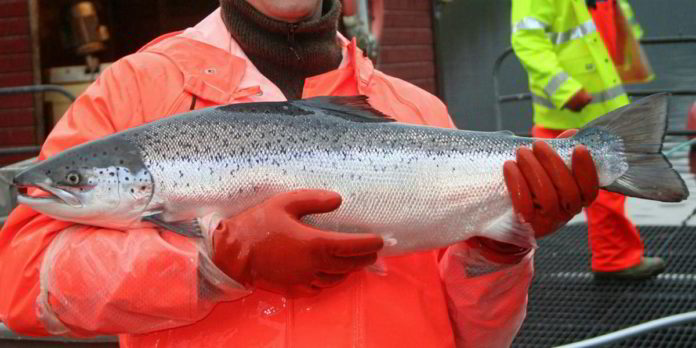
Study finds large triploid salmon face higher welfare risks in sea cages.
A new peer-reviewed study has found that triploid Atlantic salmon experience significant physiological disadvantages once they reach larger harvest sizes, helping to explain persistent welfare problems reported during the final marine growth phase.
The research, published in Scientific Reports in December 2025, compared triploid and diploid Atlantic salmon at around 3 kilograms, a size representative of late-stage sea cage production. Triploid salmon are sterile and have been promoted as a tool to prevent escaped farmed fish from breeding with wild populations.
The study found that large triploid salmon had higher baseline metabolic demands, reduced aerobic capacity, and lower tolerance to both low oxygen conditions and elevated temperatures compared with diploid counterparts. These limitations were linked to reduced efficiency in oxygen uptake, supported by gill tissue analysis showing lower lamellar density and therefore reduced gill surface area.
According to the authors, the disadvantages become more pronounced as fish grow larger because triploid salmon have fewer but larger cells. Larger cells have lower surface-to-volume ratios, which constrains oxygen exchange and increases basal maintenance costs. This combination reduces the fish’s ability to cope with environmental stressors common in sea cage environments, including hypoxia and summer heat events.
Earlier laboratory studies have often found minimal physiological differences between triploid and diploid salmon, but these experiments typically involved smaller fish and freshwater conditions. The authors argue that this has masked size-dependent limitations that only become apparent during the latter marine phase, when most commercial welfare issues have been reported.
The findings align with industry observations in Norway, where triploid salmon have shown higher mortality, increased wound incidence, poorer growth performance, and lower harvest quality. These concerns led the Norwegian Food Safety Authority to impose a temporary moratorium on the use of triploid salmon in sea cages after 2023. Triploids continue to be used in some other producing regions, including Canada and Australia.
The researchers conclude that oxygen supply limitations and elevated metabolic costs provide a mechanistic explanation for why triploid salmon are more vulnerable to environmental extremes at larger sizes. They warn that climate-related stressors such as marine heatwaves and episodic hypoxia are likely to further exacerbate these challenges.
The study suggests that the suitability of triploid salmon for sea cage farming should be evaluated with greater emphasis on late-stage production conditions, rather than early growth performance alone.