

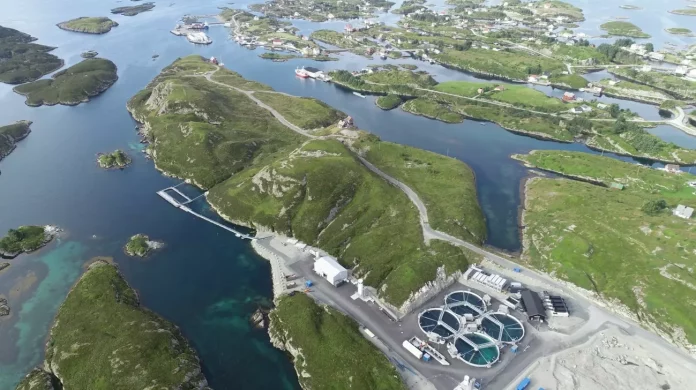
Bue Salmon has begun preparatory groundworks at Lutelandet, marking the first physical step in the development of what the company plans to make Norway’s largest land-based salmon farming facility.
The project moved into the construction phase on 6 January with the first major blast at the site, following municipal approval shortly before Christmas. The start of blasting allows the removal of rock and overburden to proceed in parallel with other unresolved elements of the project, including financing and clarification of long-term power supply.
The groundworks are underpinned by an agreement with Kvantum, reached in autumn 2025, covering the extraction, processing and sale of rock material from the site. Under the arrangement, Kvantum manages the full value chain, from blasting through to export, with a significant share of volumes already allocated to customers in Europe. The first shipments of rock are expected to leave Lutelandet during the first quarter of this year.
Bue said the collaboration shortens the timeline to a potential first fish stocking and reduces initial capital requirements by offsetting some early construction costs through material sales. Once construction of the farming facility itself begins, the company estimates a build period of around two years.
Kvantum has previously led large-scale extraction projects, including the Skipavika terminal and industrial park, where more than 20 million cubic metres of material have been removed.
Bue also confirmed the appointment of Terje Simmenes as Director of Development. Simmenes, formerly project director for the Bergen light rail project, joined the company last week and participated in the initial blasting at Lutelandet following a review of Bue’s pilot facility at Bulandet.
Founded in 2015, Bue operates a pilot land-based facility at Bulandet with capacity for 1,400 tonnes of post-smolt and market-size fish, and licences for total production of 5,500 tonnes. The Lutelandet project is intended to support a much larger grow-out operation, with the company targeting long-term annual production of 50,000 to 60,000 tonnes.