

Military escalation in Middle East halts air and sea freight, triggers war-risk surcharges.
Military strikes between the US-Israel and Iran between 28 February and 1 March 2026 have led to an immediate suspension of air and sea freight operations across the Middle East, with significant knock-on effects for global transportation and logistics flows.
Airfreight operations across the region have largely ground to a halt following airspace restrictions and airline network suspensions. Several carriers have imposed booking stops, creating shipment backlogs that are expected to take weeks to clear once airspace reopens.
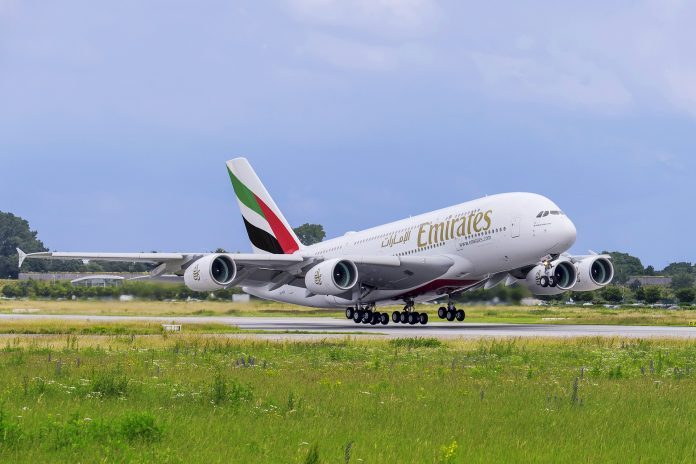
Emirates SkyCargo has suspended flights until at least 15:00 UAE time on 2 March and introduced a temporary 24-hour booking and acceptance freeze to stabilise operations. KLM has halted services to Dubai, Riyadh and Dammam through 5 March, while Turkish Airlines has announced multiple cancellations across Middle East destinations, with further changes possible depending on airspace decisions.
On ocean freight, carriers have suspended transits through both the Bab el-Mandeb strait and the Suez Canal, as well as the Strait of Hormuz. The latter, located between Iran and Oman, is one of the world’s most important oil chokepoints, handling roughly 20% of globally traded oil. A sharp increase in oil prices is considered likely, adding further pressure to container shipping costs.
DP World has temporarily suspended operations at Jebel Ali terminals following an incident linked to intercepted aerial threats, with reports of a fire within the port. Vessel delays and yard congestion are expected even after operations resume.
Major carriers have announced additional measures. MSC has suspended all new bookings for worldwide cargo to the Middle East. Maersk has halted vessel crossings through the Strait of Hormuz, warning of schedule adjustments for Arabian Gulf calls. CMA CGM has instructed vessels bound for or departing the Gulf to proceed to shelter and suspended Suez Canal passage.
Immediate war-risk surcharges have been imposed by several ocean carriers, and freight rates are expected to rise in the short term until the situation stabilises.
Road freight movements remain operational, though security-related delays at border crossings are anticipated. The newly opened Al Rawdah crossing between the UAE and Oman may provide some relief to congestion, subject to security controls.
Logistics providers have advised customers to confirm new bookings prior to dispatch, build additional buffer time into shipments to and from the Middle East, and prepare for significant delays on cargo already in transit. Disruption is also expected to affect the Asia–Europe trade lane due to vessel re-routing and capacity constraints.
The situation remains fluid, with further operational and pricing impacts likely as geopolitical developments unfold.