

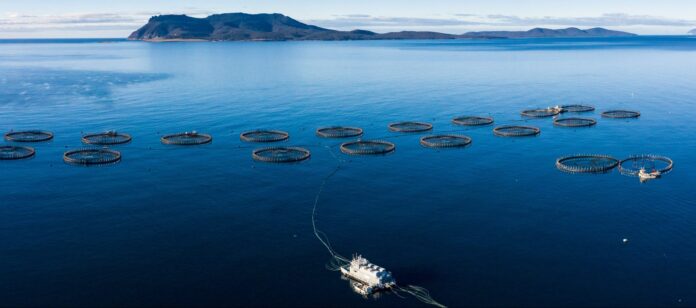
A new report from Australia’s national science agency, CSIRO, has found community support for Tasmania’s salmon farming sector has declined significantly from the strong backing it enjoyed a decade ago.
The study, Troubled waters or shared futures?, analysed responses from 931 Tasmanians surveyed in April 2025, including government employees, aquaculture workers, marine scientists, tourism operators, commercial fishers, advocacy groups, recreational water users and members of the general public.
Researchers found the industry has experienced a “significant and sustained shift from the strong community support experienced from 1986 to 2015 when the industry held an ‘enviable’ social licence to operate”.
According to the report, salmon aquaculture was identified by respondents as both a significant perceived threat to the marine environment and a major concern among local industries. Negative views of the sector’s social licence were reported across all stakeholder groups except those employed within the industry.
More than 90 percent of respondents said Tasmania’s waterways were central to their way of life, while around 70 percent said they were “worried or angry” about the health of the marine environment.
The survey builds on a similar assessment conducted in 2021, which recorded higher levels of support for the industry. Since then, marine scientists and government employees in particular have shifted toward more negative views, the report said.
One area where perceptions improved was the industry’s economic contribution. Researchers found respondents across all groups acknowledged the sector’s role in employment and regional development.
The authors said rebuilding community trust would require long-term efforts from both industry and government focused on transparency, environmental credibility and improved stakeholder engagement.
Industry body Salmon Tasmania said the sector operates under some of the strictest regulatory frameworks globally.
Chief executive John Whittington said producers take their responsibilities to communities seriously and work closely with regulators to ensure operations are supported by “excellent practices and the very best science”.
Tasmania’s salmon industry employs more than 5,000 people and remains one of the state’s largest food export sectors.