

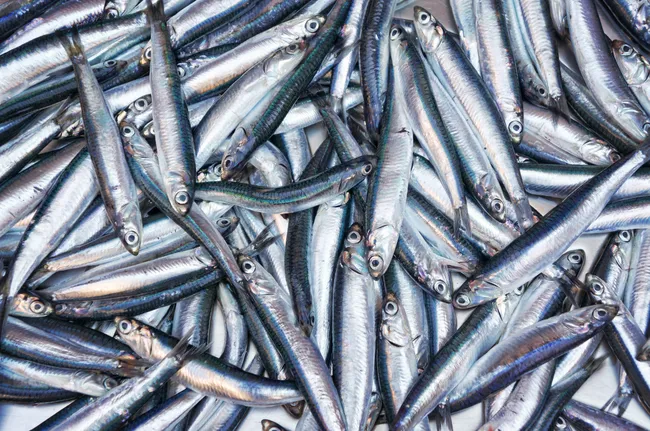
Global fishmeal production fell sharply in the first quarter of 2026, while fish oil output proved more resilient, according to marine ingredients organisation IFFO.
IFFO said cumulative fishmeal production through March was down 28% year on year, with March production alone falling 38%.
Fish oil production also declined, though at a slower pace, with first-quarter output down 12% year on year. IFFO said Denmark, Norway and Spain showed greater resilience in fish oil production during the period.
The figures are based on statistics from IFFO members in countries including Peru, Chile, Norway, Denmark, Iceland, the UK and the United States, representing around 40% of global fishmeal production and 50% of fish oil output.
IFFO market research director Enrico Bachis said Peru’s anchovy quota for the first 2026 fishing season had been set at 1.91 million tonnes, equivalent to 27% of estimated biomass.
He noted that biomass estimates were around 31% higher than September 2025 levels, though still 35% below March 2025 estimates and 17% below the long-term average for January to March surveys. Fishing bans have also been imposed in some areas due to high juvenile anchovy presence.
IFFO said China’s fishmeal demand remains stable for now, supported by aquaculture production and elevated inventories of farmed species, though weaker farm-gate prices for species including largemouth bass, snakehead and yellow catfish could reduce feed demand later in the year.
The organisation also pointed to weaker piglet prices in China due to oversupply and softer demand, potentially reducing short-term demand for piglet feed and fishmeal. Soybean meal prices have also declined amid oversupply, while Chinese soybean imports in the first quarter were down 3.1% year on year, according to customs data.