

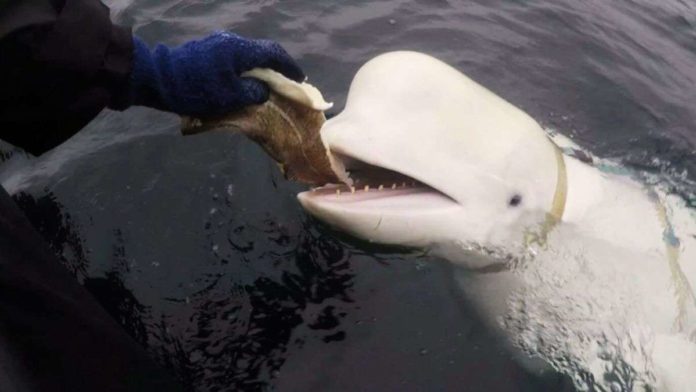
Initial concerns arose after images of Hvaldimir’s body, which showed multiple holes, led to suspicions of foul play
The famous whale Hvaldimir, found dead in August, likely died from a bacterial infection, according to a final autopsy report.
Hvaldimir was found dead in the sea on Saturday 31 August. The whale had several holes in its body and the organizations OneWhale and Noah believed it was highly likely that it had been shot and killed.
According to Amund Preede Revheim, head of the North Sea and Environment Section at Norway’s South-West Police District, the investigation was complicated by the advanced decomposition of many of Hvaldimir’s organs.
The report concluded that the likely cause of death was a bacterial infection, possibly triggered by a wound in the whale’s mouth from a 35-centimeter stick lodged there.
Thorough examinations have found no evidence to suggest the whale was illegally killed.
The police have now closed the case, determining that the injuries, including superficial wounds on the skin and holes found on the underside of the whale, were likely caused by birds or natural decomposition.
“Veterinary and forensic assessments concluded these were not gunshot wounds,” Revheim said. X-rays of Hvaldimir’s chest and head revealed no projectiles or metal fragments.
Marine biologist Sebastian Strand, who worked closely with the whale, expressed relief at the findings. “Hvaldimir inspired many of us, and we will continue our work in marine education,” Strand told Norwegian broadcaster NRK.
The autopsy also showed that Hvaldimir’s stomach was empty at the time of death, and the extensive decomposition of his organs made it difficult to draw definitive conclusions. However, the report stated there was no indication that human activity directly caused the whale’s death.