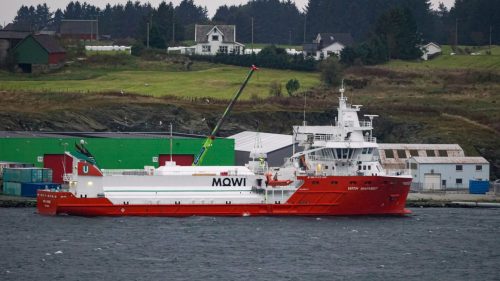
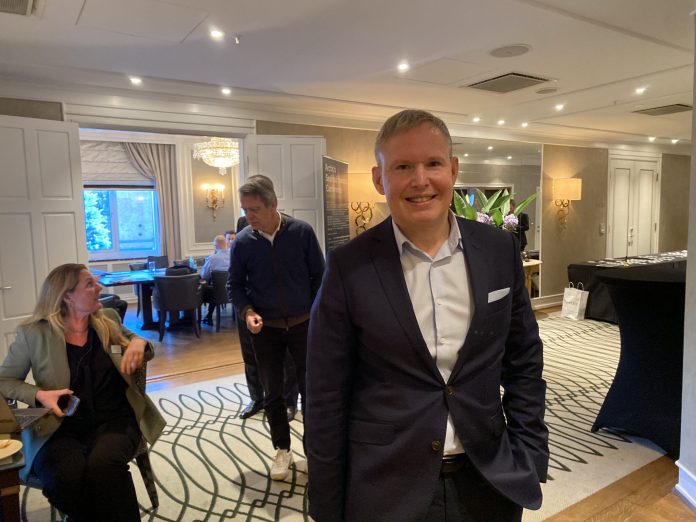
As Mowi circles back to Skretting, SalmonBusiness founder and iLaks editor Aslak Berge looks at why feed ownership has remained a strategic fault line for salmon farmers for 40 years.
This week Mowi concluded its review of the Feed Division by entering a partnership with Skretting. Under the agreement, Mowi will keep its own feed factories, but production will be based on Skretting’s feed formulation. The structure effectively separates manufacturing from product development, and reopens an old question in salmon farming: is it strategically important to own feed, or is it enough to secure the best formulation and procurement through a long-term partner?
For a fully integrated farmer, feed is more than an input cost. It is typically the single largest cost item in production, and changes in formulation can affect growth, survival, fish welfare and harvest timing. In a tight market, access, pricing and logistics can be as important as biology.
Mowi’s renewed alignment with Skretting also carries historical resonance. The two companies have been intertwined for decades.

From Hydro to Marine Harvest
When Mowi was owned by Norsk Hydro in the 1980s, it was already buying feed from Skretting. At the time, Skretting was a joint venture between the Skretting family and BP, and the relationship with Hydro’s own salmon business was close.
In the mid-1990s, Skretting chief executive Atle Eide was recruited to run Hydro Seafood, the salmon farming arm Hydro was preparing to sell.
“Eide was given a large war chest to build a bigger and more attractive company than it had been when the first soundings were taken in the market,” Eide’s predecessor Jostein Refsnes said in the book Goldfinger – The History of Mowi.
Eide pursued acquisitions that increased Hydro Seafood’s licence portfolio fivefold.
When Norsk Hydro began looking for a buyer for Hydro Seafood in December 1998, Nutreco emerged as a key suitor. The Dutch group, newly established through a management buyout from BP, owned Skretting and was listed in Amsterdam. Nutreco had already acquired UK fish farmer Marine Harvest, before winning the contest for Hydro Seafood in 2000.
Mowi ends strategic review with surprise outcome and $65 million in savings
Nutreco merged Hydro Seafood and Marine Harvest, but soon discovered that salmon farming was a different business from feed manufacturing.
After an internal strategy process, Nutreco decided to sell the enlarged Marine Harvest after combining it with Stolt Sea Farm. By then Marine Harvest was by far the world’s largest salmon farming company.
Before the business was sold, it was tied into a long-term feed contract with Skretting that was not regarded as cheap.
In the spring of 2006, shipping magnate John Fredriksen acquired Marine Harvest via Pan Fish. After the subsequent acquisition of rival Fjord Seafood, the farming assets were consolidated under the Marine Harvest name.
The red thread: feed as strategy
The strategic importance of feed has run through boardroom discussions at Hydro Seafood, Marine Harvest and later Mowi for four decades.
In 2013, the group concluded it should control feed production. The preferred route was to acquire EWOS, a Skretting competitor, but that bid failed. As a direct consequence, the board began investigating in-house production.
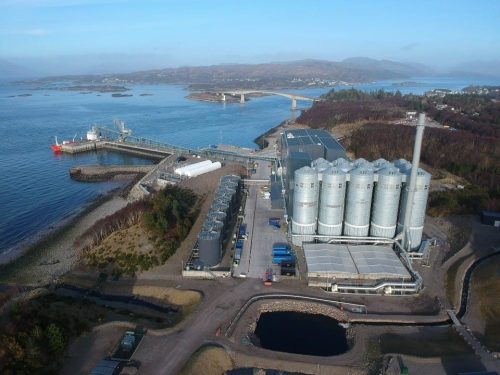
In the summer of 2014, Marine Harvest opened its first feed plant in central Norway. Five years later it opened a second plant in Kyleakin, Scotland. Around the same period, Marine Harvest changed its name to Mowi.
At the same time, then chief executive Alf-Helge Aarskog stepped down after almost a decade in the role and was replaced by Ivan Vindheim. Vindheim has repeatedly argued that it is not self-evident that a salmon farmer must own feed production.
Aslak Berge’s ‘Goldfinger – The History of Mowi’ now available in English
“Some own feed and others do not. It is not a must,” Vindheim said in Goldfinger.
Under Vindheim’s leadership, Mowi explored selling its feed factories, but without achieving what it regarded as an acceptable price. As part of a broader drive to reduce costs, Vindheim later announced a strategic review of the feed operation.
Once again, the factories were not sold. Instead, Mowi has chosen to retain its feed assets while entering into a strategic partnership with its former partner Skretting. The company expects the partnership with Skretting and its parent Nutreco to deliver more than $65 million in net annual cost savings, driven by improvements in feed formulation, procurement and logistics.
The hope is that this hybrid model will combine lower costs with the strategic advantage of access to high-quality feed at the right price.