

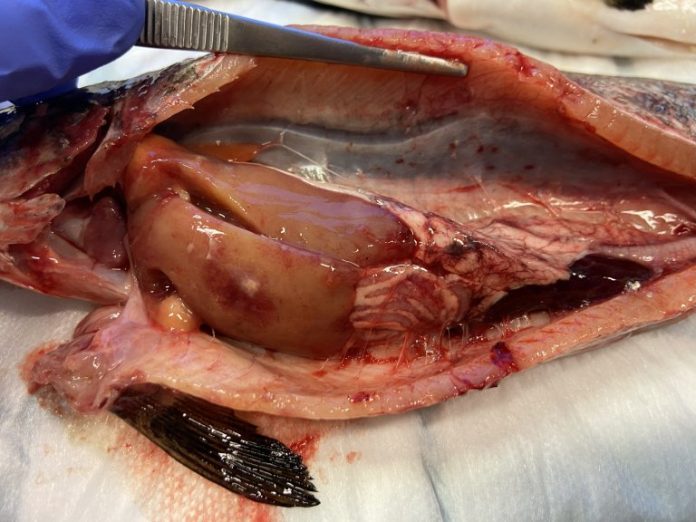
New North Atlantic project launched to study piscirickettsiosis in farmed salmon.
Norway’s Veterinary Institute has launched a new research project on piscirickettsiosis in the North Atlantic, following an increase in disease cases in Scotland and Ireland and outbreaks at several Norwegian sites in 2024.
The two-year project, named “PisciNor”, is funded by the Norwegian Seafood Research Fund (FHF) and led by senior researcher Duncan Colquhoun at the Veterinary Institute. The work will focus on Piscirickettsia salmonis, the bacterium that causes piscirickettsiosis and is responsible for most antibiotic use in Chilean salmon farming.
“In Norway, very little antibiotics are used in aquaculture, whereas in Chile large quantities are used and around 85 percent of this is used against piscirickettsiosis. Therefore we must be on our guard,” said Colquhoun.

The project will compare P. salmonis strains from Ireland, Scotland and Norway, which have not previously been analysed together in a single genetic study. Researchers aim to identify similarities and differences between the strains and to select candidates suitable for vaccine development.
PisciNor will also produce a best-practice report on diagnosis and management of the disease under North European conditions, and investigate possible natural reservoirs of the bacterium, including jellyfish, plankton and pink salmon.
Colquhoun said the overall goal is to improve biosafety related to piscirickettsiosis in aquaculture, primarily in Norway but also in Ireland and Scotland. Project partners include Patogen AS, the Marine Institute in Galway, the Marine Laboratory in Aberdeen, ADL Diagnostic in Chile and NCE Aquaculture.