

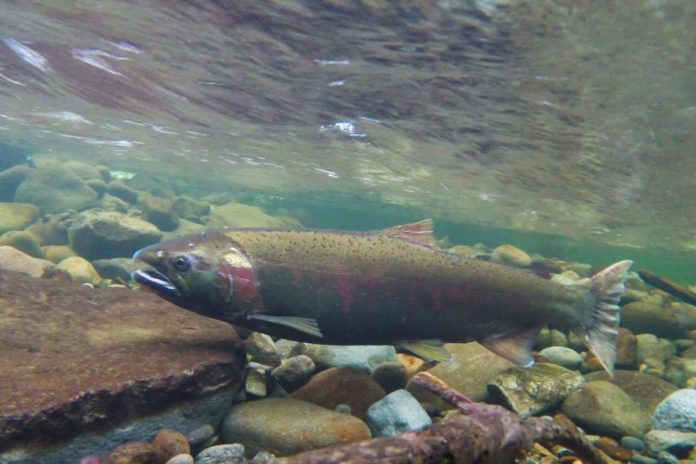
Prolonged hypoxia causes metabolic depression and reduces growth in juvenile coho salmon, according to a study by researchers from four Chilean universities: San Sebastián, Austral de Chile, de Los Lagos, and Católica de Temuco.
The study exposed juvenile coho (Oncorhynchus kisutch) to oxygen saturations of 100%, 60%, 50%, 35%, and 25% over 30 days. Survival reached 100% across all groups except the 25% saturation group, where mortality hit 40%.
Fish under severe hypoxia (35% and 25% saturation) showed significant reductions in weight, length, and specific growth rate, alongside lower feed conversion efficiency. Researchers attribute the decline to reduced aerobic ATP production, lower protein synthesis, and disruption of the GH-IGF-1 hormonal axis.
Blood metabolites shifted toward an anaerobic profile, with altered glucose and lactate levels. Liver enzymes linked to glycolysis and lipid oxidation also changed, and muscle glycogen fell while glucose rose.
Hypoxia altered muscle fatty acid composition, reducing polyunsaturated fatty acids and accumulating triglycerides across serum, liver, muscle, and brain tissue. The researchers suggest reduced beta-oxidation capacity as the likely driver.
Brain monoamine neurotransmitters — including serotonin, dopamine, and norepinephrine — showed complex, non-linear responses. Epinephrine and norepinephrine increased with hypoxia severity, consistent with stress-driven energy mobilisation. Serotonin and norepinephrine showed an inverse correlation, pointing to a regulatory balance under oxygen stress.
The study concludes coho salmon tolerate moderate hypoxia (50–60% saturation) with limited physiological impact. Severe hypoxia, however, compromises productivity and welfare materially.
As climate change increases the frequency and duration of low-oxygen events in both natural and farmed environments, farm managers and regulators will need to treat oxygen thresholds as a primary production risk variable.