

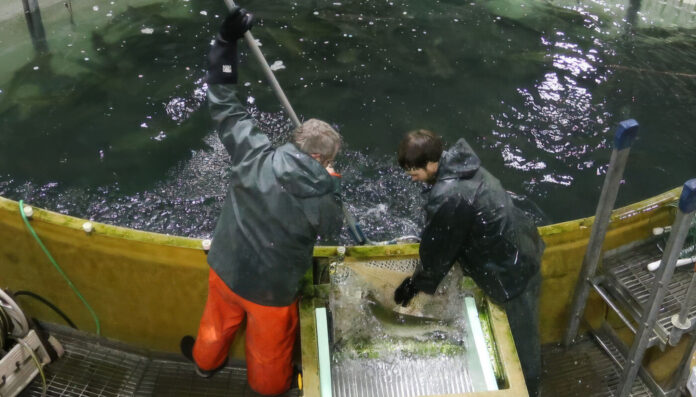
A four-month trial at the Freshwater Institute has shown that multi-vessel membrane bioreactors can reduce make-up water use in recirculating aquaculture systems by 94 percent without reducing rainbow trout growth or survival.
The study, published in Aquacultural Engineering, compared three control RAS with three RAS equipped with multi-vessel membrane bioreactor systems. The units treated solids-laden discharge from drum filter backwash and solids flushing before returning filtered water to the RAS.
Researchers said the MBR-equipped systems reduced make-up water use from around 2,004 litres per day to 129 litres per day, cutting water exchange rates from 21 percent to 1.4 percent.
The multi-vessel system combined membrane filtration with separate aerobic and anoxic treatment zones for nitrification and denitrification. Pulse-air membrane scouring was also used to reduce membrane fouling and improve cleaning access.
Rainbow trout performance was broadly similar between treatments. Fish in both systems grew from around 1 kg to 2.8 kg during the trial, with survival rates of 96 percent. Researchers also reported lower deformity prevalence in the MBR-equipped systems.
The study found nitrate-nitrogen removal exceeded 97 percent when sufficient supplemental carbon was added, although denitrification efficiency declined during periods when carbon dosing did not match feeding rates.
Researchers also reported that low-dose ozone improved water clarity and reduced concentrations of some metals in the low-exchange systems.
The authors said the study demonstrated the operational feasibility of integrating membrane bioreactors into RAS treatment loops as a denitrification technology capable of sharply reducing water demand.
They added that lower water requirements could expand the number of potential sites for RAS facilities, including locations with restricted water availability, high nitrogen concentrations in intake water, or tight discharge limits.
However, the paper cautioned that successful operation would require experienced staff, robust monitoring systems and further economic analysis covering capital costs, energy use, sludge management and long-term operational performance.