

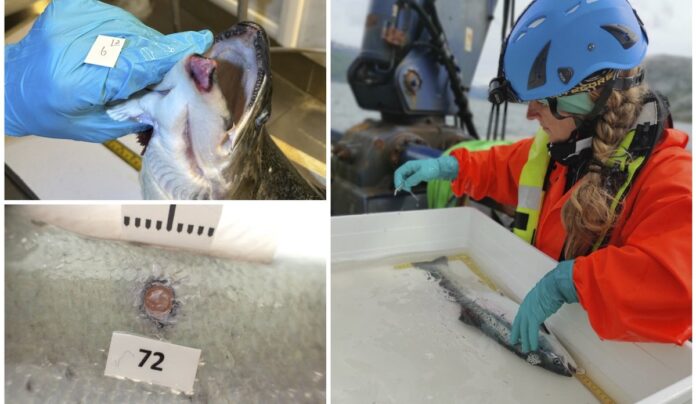
New research from Norway’s Institute of Marine Research identifies temperature, salinity and handling intensity as key drivers of bacterial wound outbreaks in farmed salmon, with mitigation strategies that can reduce both infection risk and treatment frequency.
The findings, from the FHF-funded RiskIdent project led by Tina Oldham, show that wound-causing bacteria are strongly linked to specific environmental conditions. Moritella viscosa was only detected at temperatures below 10°C and salinity above 30 ppt, while severe cases of Tenacibaculum spp. occurred under the same conditions.
The study combined analysis of 452 handling events in northern Norway, laboratory trials, and 16 months of monitoring at a commercial site. Results indicate temperature and salinity can act as indicators of high-risk periods.
Handling intensity was also a key factor. Fish tolerated the first two delousing treatments without a clear increase in wounds, but risk rose significantly after three or more treatments. Mechanical and thermal methods were linked to higher mortality, while chemical treatments had limited impact on mortality but increased wound prevalence in repeatedly treated fish.
Laboratory trials showed that low oxygen levels slowed healing, while reduced salinity and high oxygen levels accelerated recovery. After seven days, wounds in low-salinity, high-oxygen conditions were around one-third the size of those in less favourable environments.
A dynamic lice management strategy combining environmental monitoring with operational adjustments reduced treatment needs. Fish guided into brackish surface layers required around half as many delousing treatments as control groups, with lower wound prevalence and reduced bacterial presence.
The researchers recommend reducing handling frequency as the primary measure to limit risk, supported by environmental monitoring to identify high-risk periods. Freshwater-based treatments are considered preferable when intervention is required.