

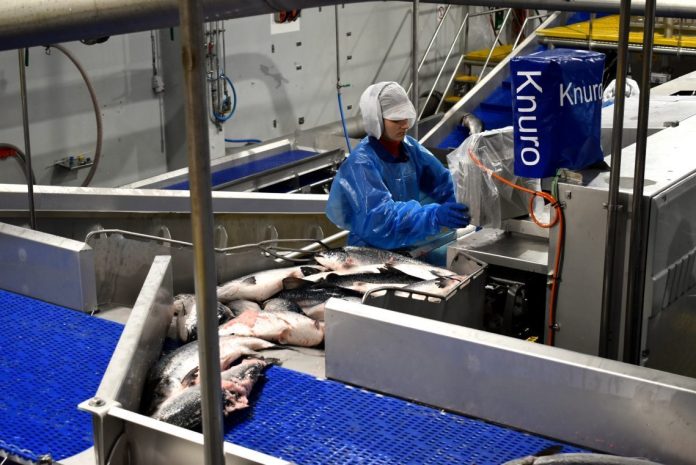
Norwegian seafood groups warn hiring rules are driving layoffs and reducing flexibility.
Norwegian seafood industry organisations say tighter hiring regulations introduced in 2023 have reduced operational flexibility, increased costs and raised the risk of layoffs across the processing sector, according to reporting by iLaks.
Both Sjømatbedriftene and Seafood Norway have backed comments by Hofseth Group owner Roger Hofseth, who has argued that recent layoffs in the processing industry are being driven more by regulatory changes than by market conditions.
The revised rules significantly restrict the use of labour hired through staffing agencies, limiting temporary hiring to specific cases such as short-term positions or agreements with union representatives. As a general rule, employees performing ordinary work must now be permanently employed by the company where the work is carried out, according to the Norwegian Labour Inspection Authority.
Sjømatbedriftene CEO Robert Holmøy Eriksson told iLaks that the changes have had “major negative consequences” for many companies, saying the organisation has received numerous enquiries from members struggling to manage workforce needs under the new framework.
Seafood Norway CEO Geir Ove Ystmark also said the restrictions had reduced companies’ ability to scale operations up and down.
Under the previous system, companies could reduce activity by ending hiring contracts during weaker market periods, he said. With a greater share of the workforce now required to be permanently employed, downsizing increasingly results in formal layoffs instead.
Both organisations emphasised that seafood processing has a particular need for flexibility due to seasonal production patterns, weather conditions and biological factors.
New approval scheme?
Sjømatbedriftene has proposed introducing a new approval scheme for staffing providers, which would allow companies to hire labour under earlier rules when using approved operators. Eriksson said the aim would be to target non-compliant actors without increasing the burden on serious companies.
The organisation warned that the current regulations could weaken the competitiveness of Norwegian processing operations, make it harder to secure labour during peak seasons, and in some cases push companies to close facilities or move production abroad.
In a separate interview with iLaks, Roger Hofseth said layoffs announced by several processors, including Isfjord Norway, 1814 Salmon and Filetfabrikken, should be seen in the context of the hiring rule changes rather than deteriorating market conditions.
He said the shift away from foreign staffing contracts has increased fixed costs and made it more expensive for companies to manage normal market fluctuations, estimating that around 250 workers who would previously have been hired temporarily must now be employed on permanent contracts.
The Hofseth Group has itself carried out multiple rounds of layoffs in recent months, including at its processing plants in Ålesund and Syvde. While the company has cited factors such as salmon prices, expectations for 2026 and the resource rent tax, Hofseth has also pointed to the hiring rules as a contributor to higher fixed costs.
Hofseth told iLaks that he believes the market situation is broadly similar to previous years, but that companies now lack the tools they previously used to adjust staffing levels. He also argued that layoffs increase costs for the Norwegian welfare system, as foreign workers laid off from permanent roles may become part of the national social security system.
Both industry organisations said the regulatory framework should support, rather than undermine, the competitiveness of Norwegian seafood processing in a global market.