

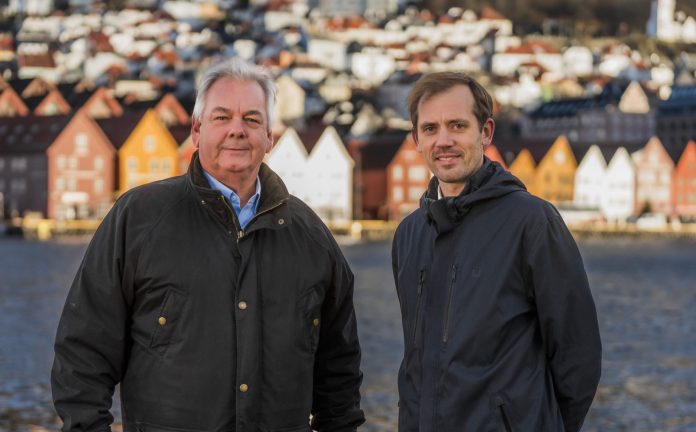
NASF to launch new sustainability award as Pareto strengthens role in Bergen.
The North Atlantic Seafood Forum (NASF) has announced the launch of a new North Atlantic Sustainability Award, marking a significant expansion of the conference’s emphasis on long-term environmental and social performance across the seafood sector.
“We saw that there was no dedicated recognition for serious sustainability work in the industry,” NASF Managing Director André Aske told SalmonBusiness. “This award is intended to highlight initiatives that demonstrate measurable impact and genuine long-term commitment.”
The award is designed to showcase standout efforts within the North Atlantic at a time when sustainability expectations, regulatory requirements and investor scrutiny are converging more sharply than ever. Organisers say the award will become a central feature of NASF’s work to recognise leadership and accelerate best practice across the industry.
“When we discussed the concept with companies like MSC and ASC, the feedback was very positive. That helped confirm that this was something the industry actually wanted,” adds Aske.
The award will be presented when the seafood industry gathers for NASF’s three day conference in Bergen in March 2026. As in previous years, the forum will take place at the Radisson Blu Royal Hotel on Bryggen, with organisers expanding into the adjacent Bryggens Museum for receptions and networking events.
A three-member jury has been appointed to oversee the selection process:
- Minna Epps, Global Ocean Policy Director, IUCN Centre for Policy and Law
- Johan Henrik Kintzell Frøstrup, CEO of Debio
- Kristjan Th. Davidsson, chairman of the board at Brim
Candidates will be assessed on regional relevance, demonstrable results, innovation, environmental and social integrity, governance, scalability and long-term viability.
Pareto strengthens role and integrates investor content
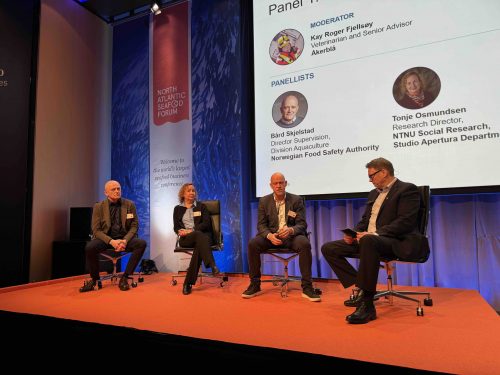
Meanwhile, Oslo-based Pareto Securities, which owns and organises NASF, is increasing its visible involvement for 2026 through refreshed branding and a more integrated programme design.
“Aquaculture and seafood have been core sectors for us for many years,” said Carl-Emil Kjølås Johannessen of Pareto. “NASF has evolved into the natural meeting place for industry leaders and investors, and for 2026 we are bringing these discussions closer together.”
More than 50 companies have already confirmed participation, a record at this stage. Even so, the organisers say they do not plan to expand capacity beyond the venue’s limits.
“It’s important to keep NASF at the right scale,” Aske said. “What matters is attracting the decision-makers—the CEOs, CFOs and senior managers shaping the sector. We aim to create a programme that is relevant at a strategic level. It’s not about buyers and sellers; it’s about senior leaders looking at the bigger picture.”
Johannessen agrees: “We’re not looking to make the conference bigger, but we do want to make sure the right people are in the room. It’s a gathering of top-level seafood delegates.”
Programme: feed, technology and markets
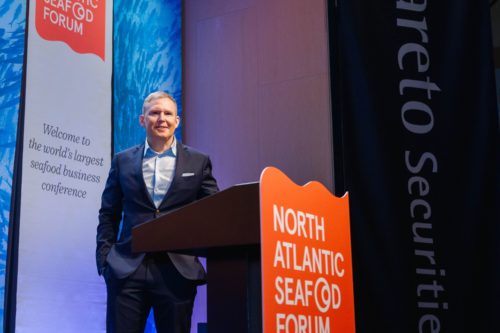
The 2026 forum will retain its core thematic structure with dedicated tracks on feed, technology, markets and sustainability.
A full-day feed programme will cover ingredients, raw materials and supply dynamics. The technology track will examine the strategic direction of suppliers to the salmon sector, including emerging topics such as the evolving balance between closed-containment systems at sea and land-based RAS.
“Closed containment at sea is progressing quickly, while land-based production continues to develop in parallel,” Johannessen explains. “These models increasingly compete for the same capital, and regulatory decisions in Norway will strongly influence where investment flows.”
The market stream will bring major buyers together with producers to discuss demand trends, price expectations and production outlooks across key regions.
“With the introduction of the sustainability award and a more closely linked investor–industry programme, NASF 2026 will be an even stronger platform for understanding where the seafood sector is heading,” Aske concludes.