

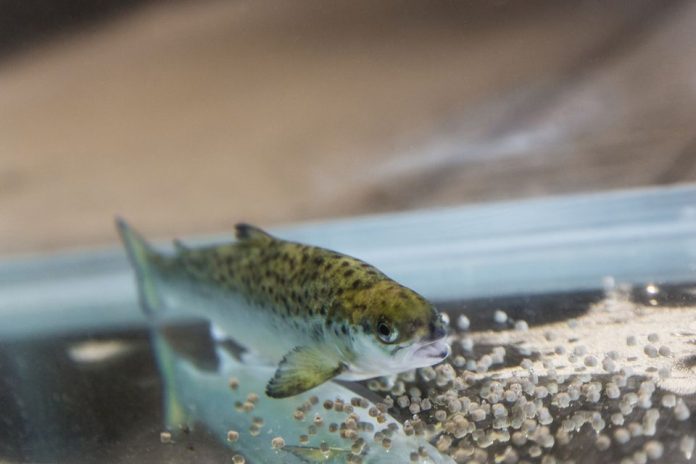
Nofima tests new zinc delivery method for salmon feed.
Researchers at Nofima say a new method for adding zinc to salmon feed could improve mineral uptake in fish while reducing environmental emissions.
The approach involves moving zinc supplementation from the premix stage of feed production to the oil coating applied to pellets after extrusion. According to Nofima researcher Antony Philip, this change can improve zinc digestibility and reduce the amount lost to the environment.
Zinc is an essential mineral for salmon, playing a role in processes such as wound healing. However, a relatively small proportion of the zinc added to feed is currently retained by the fish, with much of it released into the surrounding aquatic environment.
The issue has gained regulatory attention in the European Union, which is considering stricter limits on zinc content in aquafeeds. Current regulations allow up to 180 milligrams of zinc per kilogram of feed for salmonids and 150 mg/kg for other fish species. The European Food Safety Authority has proposed reducing the limit for salmon feed to 150 mg/kg.
Philip said improving the digestibility of zinc could allow farmers to meet nutritional requirements even if regulatory limits are tightened.
In conventional feed production, zinc is typically added as part of a micronutrient premix before the feed mixture passes through an extruder that subjects it to high temperature and pressure. Nofima researchers say this process can cause zinc to bind within protein structures formed during heat treatment, limiting its availability in the salmon’s digestive system.
By instead applying zinc in the coating stage alongside oils, researchers believe the mineral can remain more accessible for absorption.
Trials conducted at Nofima’s Feed Technology Centre using post-smolt salmon weighing between 200 and 280 grams found that coating-based supplementation increased zinc digestibility by up to 15 percentage points. Zinc levels in faeces were reduced by as much as 25 percent.
The institute says the method could deliver several benefits, including improved fish health, lower zinc emissions to the environment and reduced zinc concentrations in aquaculture sludge, potentially increasing the value of sludge for reuse.
Nofima is now launching a new project, TOP-zinc, to further investigate the approach and evaluate its effects on fish health during long-term sea-cage trials.
The project involves collaboration with the Institute of Marine Research, Akvaplan-niva, Mowi Feed, Huvepharma and NIVA, and is funded by the Norwegian Seafood Research Fund (FHF).
Renate Johansen, R&D director at FHF, said reducing excess zinc emissions from fish farming is becoming increasingly important as environmental regulation tightens.
“New EU requirements, which will probably mean that zinc levels in the feed must be limited, could cause deficiency diseases in salmon unless we find a good solution that gets more of the zinc from the feed into the fish and less out into the environment,” she said.