

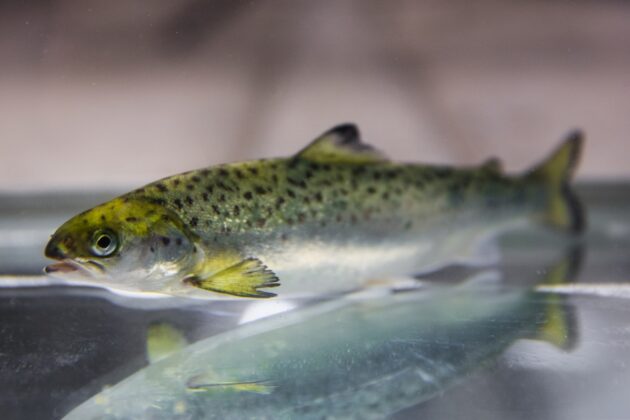
Researchers involved in a Norwegian project examining the performance of large smolt in the seawater phase have identified varying levels of heart abnormalities, skeletal deformities and nephrocalcinosis among fish groups analysed so far.
The findings come from the FHF-funded PreSSS project, which is examining how production protocols and environmental conditions during the land-based phase affect fish welfare and performance after sea transfer through to harvest.
The project is led by Nofima in partnership with DNV, NORCE, Norwegian University of Life Sciences (NMBU) and Cermaq, alongside industry partners providing production data and fish samples.
The use of larger smolt has increased in recent years as producers seek shorter seawater production cycles, but researchers said performance after transfer to sea can vary significantly.
Henriette Alne of DNV said the project aims to identify measures in large smolt production that could improve welfare and deliver more predictable performance at sea.
“Everything is connected. We believe that fish with good welfare will also perform well, typically measured through low mortality and good growth,” Alne said.
Researchers are analysing historical production data alongside biological sampling from multiple large smolt groups followed from freshwater facilities through to harvest.
The project is examining welfare indicators, blood chemistry, smolt quality and abnormalities affecting the heart, kidneys and skeleton.
According to preliminary findings, researchers have observed “relatively high” rates of abnormal heart morphology before and shortly after sea transfer in groups analysed so far.
“When it comes to hearts, we have not analysed the full sample material yet, but we are seeing a relatively high prevalence of abnormal hearts before and just after sea transfer for the groups analysed,” said Ida Beitnes of NMBU, who is responsible for heart health in the project.
She added that different deformities appear to occur at varying rates between fish groups.
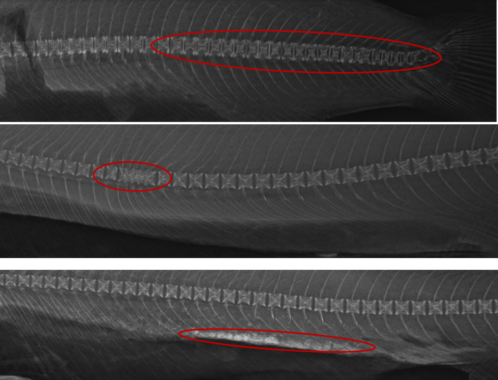
Researchers are also carrying out repeated X-ray examinations to assess skeletal deformities and nephrocalcinosis, also known as kidney calcification.
Kirsti Hjelde of Nofima said the project had already identified large differences between fish groups.
Among the deformities observed are vertebral fusions, cross-stitch vertebrae, shortened vertebrae (platyspondyly), as well as head, jaw and rib abnormalities.
The prevalence of nephrocalcinosis ranged from no findings to severe cases, according to the researchers. Incidence generally declined after transfer to seawater, which researchers said may reflect mortality among the most severely affected fish and recovery in milder cases once fish leave freshwater systems.
The project will continue until autumn 2027, with additional results expected as fish groups are harvested and further analyses completed.
Project leader Trine Ytrestøyl said the aim is to identify trends and causal relationships that could help improve welfare and predict fish performance more accurately throughout production.