

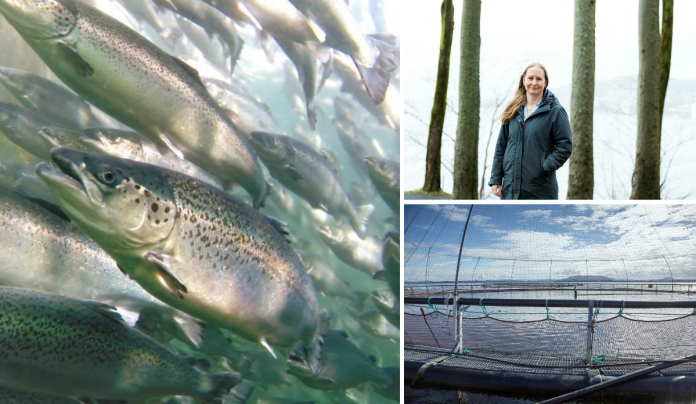
Havforskningsinstituttet: Record increase in Norwegian salmon production in 2025.
Norwegian farmed salmon production rose by 200,000 tonnes between 2024 and 2025, marking the largest year-on-year increase since official statistics began in 1980, according to the Institute of Marine Research’s 2026 risk report.
Total output growth occurred despite a lower average number of fish standing in the sea in 2025 compared with the previous year, suggesting improved utilisation of existing production capacity.
The findings are set out in Risikorapport norsk fiskeoppdrett 2026, which identifies fish welfare and the impact of sea lice on wild salmonids as the two main challenges facing the sector.
The report highlights sustained high levels of sea lice, particularly affecting wild Atlantic salmon in production areas PO3 and PO4 on Norway’s west coast, and sea trout across much of the country. Researchers attribute the situation to a combination of higher sea temperatures, increased biomass in the water, and more frequent delousing operations.
Production growth has been recorded across nearly all production areas since the introduction of Norway’s traffic light system in 2017, which links permitted growth to environmental indicators including sea lice pressure. Notably, production increased in areas PO3, PO4 and PO5, despite several years of restrictions or requirements to reduce maximum allowed biomass in those zones.
According to the Institute, output in these areas has risen 15% in PO3 (Karmøy to Sotra), 30% in PO4 (Nordhordland to Stadt) and 32% in PO5 (Stadt to Hustadvika) since 2018.
Researchers said the increase has occurred within the existing regulatory framework. Under the traffic light system, reductions in maximum allowed biomass apply at company level, while operators with low lice counts may still be permitted growth even if other producers in the same area face restrictions.
The report also notes that relatively low levels of jellyfish and harmful algae in 2025 may have supported higher survival rates, alongside operational changes that allowed producers to utilise licences more fully.
The Institute said the production increase may help explain why lice levels have remained stable in several regions despite regulatory measures aimed at reducing environmental pressure.
The data are based on official statistics from Statistisk sentralbyrå and the Norwegian Directorate of Fisheries, with 2025 figures based on preliminary data as of January 2026.