

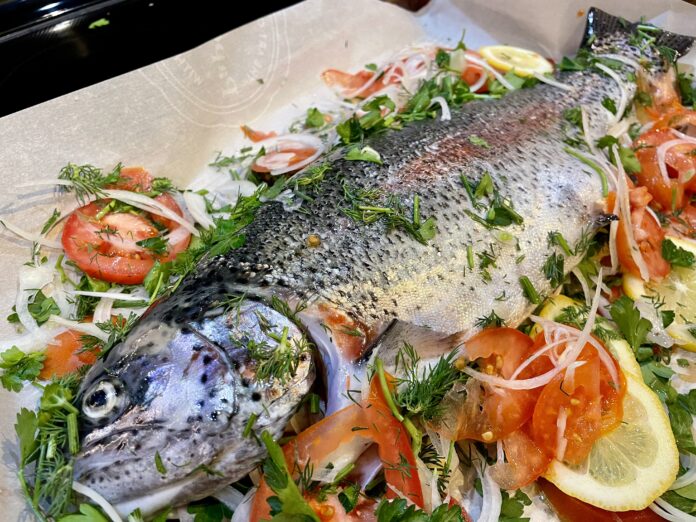
Rainbow trout store more omega-3 in fillet than salmon, study finds.
Rainbow trout store more omega-3 fatty acids in their fillets than Atlantic salmon when given the same feed, according to new research from Nofima. However, increasing omega-3 levels in trout feed did not improve health, survival or production performance under the conditions tested.
Rainbow trout accounted for 6 percent of Norwegian salmonid sales in 2024, compared with 94 percent for salmon, according to figures from the Norwegian Directorate of Fisheries. Despite biological similarities, researchers say the two species respond differently to dietary omega-3.
In a full-scale sea-cage trial conducted at three sites on Norway’s west coast, fish were fed either standard or elevated levels of EPA and DHA. Growth, welfare, survival and fillet quality were assessed. Parallel trials at Nofima’s research station in Sunndalsøra compared uptake and metabolism of omega-3 in rainbow trout and Atlantic salmon.
“We documented clear differences between salmon and rainbow trout. Rainbow trout store more omega-3 in the fillet than salmon given the same feed. At the same time, extra omega-3 did not result in better health, survival or other production benefits in rainbow trout under these conditions, as it does in salmon,” said Marta Bou, scientist at Nofima.
Trout fed a standard diet contained around 20 mg EPA+DHA per gram of fillet, rising to approximately 26 mg per gram under elevated omega-3 feeding. Salmon fed elevated levels recorded just over 16 mg per gram of fillet.
According to the European Food Safety Authority, an average adult requires 250 mg of EPA+DHA per day. Nofima noted that a 125-gram portion of trout fed a standard diet would cover this requirement.
The research was conducted under Cargill’s research licence, operated by Hofseth Aqua. Terje Utne, responsible for field trials at Cargill, said the results underline the importance of species-specific research in rainbow trout.