

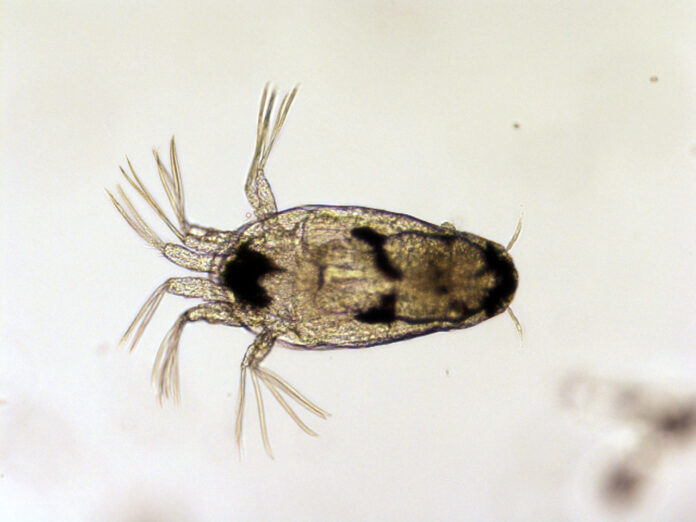
Researchers from Norwegian University of Science and Technology and Wageningen University & Research have developed an AI-based method for detecting salmon lice larvae in seawater, showing significantly higher accuracy and speed than manual analysis.
The system was trained on more than 120,000 images of lice larvae and other particles in seawater, combining real microscopy footage with synthetic data. In testing, trained biologists required more than 30 hours to identify 82% of lice larvae in a complex sample, while the AI model identified 97.5% in around 30 minutes.
Salmon lice remain a major challenge for both wild and farmed fish, with individual aquaculture sites capable of releasing millions of larvae per day. Monitoring larvae directly in seawater has historically been difficult due to low concentrations relative to other plankton and particles.
To address data limitations, researchers hatched lice larvae and added them to seawater samples, generating large training datasets using video microscopy and image processing techniques. Synthetic data was then used to expand variation in size, orientation and environmental conditions.
The researchers said the model could improve monitoring of lice distribution and support more accurate assessment of infection pressure, with potential applications in planning production and evaluating mitigation measures.
The work suggests direct measurement of larvae in seawater could reduce uncertainty in current monitoring systems, which estimate lice levels based on counts from farmed fish, according to the researchers.