

Beaver dams not major barrier to trout and salmon migration in English rivers, research and new footage suggest
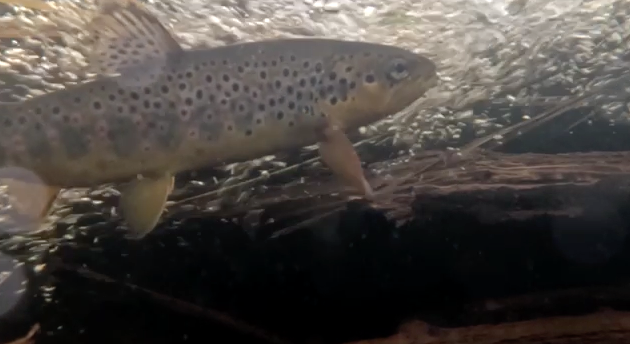
New underwater footage showing a brown trout passing a beaver dam is adding to evidence that beaver structures do not represent a significant long-term barrier to trout and salmon migration.
The footage, released by Beaver Trust, shows a trout swimming and leaping past a recently constructed dam, illustrating what researchers describe as typical salmonid behaviour when encountering natural obstructions.
Beaver Trust said concerns have previously been raised by fisheries stakeholders that beaver dams could obstruct migratory routes for trout and Atlantic salmon, particularly during spawning periods. However, research led by Dr Rob Needham has found a positive relationship between beaver presence and brown trout populations, with fish shown to be capable of passing dams under a range of conditions.
The organisation said beaver dams differ fundamentally from human-made barriers such as weirs and culverts, as they are porous, temporary and continuously reshaped by flow conditions. This allows water and fish to pass through or around structures, while also creating a mosaic of upstream and downstream habitats.
According to Beaver Trust, Atlantic salmon and trout are physiologically adapted to overcome physical obstacles through powerful swimming and, where necessary, short-distance leaping. While jumping is energetically costly and generally avoided where possible, fish will attempt it when required.
Wild Atlantic salmon populations in Great Britain have declined sharply over the past 25 years and are now classified as endangered. Beaver Trust argues that beaver activity can support wider river restoration by increasing habitat complexity, improving water retention and creating refuge areas for juvenile fish.
The organisation said the weight of scientific evidence increasingly suggests that beaver reintroduction can coexist with healthy salmonid populations, provided sites are monitored and managed appropriately.