

Tasmanian agencies question evidence in florfenicol approval process.
Tasmanian government agencies raised concerns about the scientific basis for the expanded use of the antibiotic florfenicol in salmon farming, according to documents released under right to information laws.
The documents, obtained by the Greens and reported by the ABC, show that Tasmania’s Health Department, Environment Protection Authority and Department of Natural Resources and Environment submitted a joint response to the Australian Pesticides and Veterinary Medicines Authority in November.
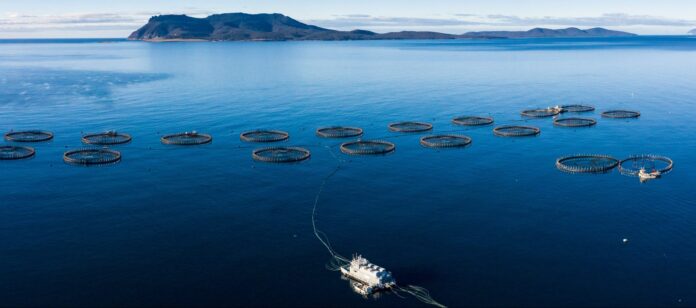
The feedback related to an application to extend florfenicol use to additional Atlantic salmon farming areas, including Tassal’s Okehampton Bay lease on the east coast. An earlier permit covering the south-east region was approved in November.
The agencies said the application did not provide “considered and robust evidence” relevant to Tasmanian circumstances, particularly in relation to human health, environmental impacts and antibiotic resistance. They also noted that Tasmania-specific data on residue monitoring and environmental behaviour of the antibiotic remained incomplete.
Concerns were also raised that expanding use into additional regions could allow multiple treatments across cohorts of fish. The agencies pointed out that the initial permit did not require prescriptions to specify which fish cohorts were to be treated.
The application to extend florfenicol use to the east coast has not been approved at this stage. Neither the regulator nor industry representatives confirmed whether it had been rejected or remains under assessment.
The regulator said it maintains an open dialogue with the Tasmanian government and that state feedback and proposed conditions are factored into final permit decisions.
The development comes as the Tasmanian salmon industry faces scrutiny over antibiotic use following the detection of florfenicol residues in non-target wild fisheries up to 10 kilometres from farming sites. The industry has until 2 March to demonstrate to the regulator that trade criteria can be met.