

Salmon farmers join push for parliamentary inquiry into wild stocks.
Scotland’s salmon farming industry has backed calls for a Scottish Parliament inquiry into the long-term decline of wild Atlantic salmon.
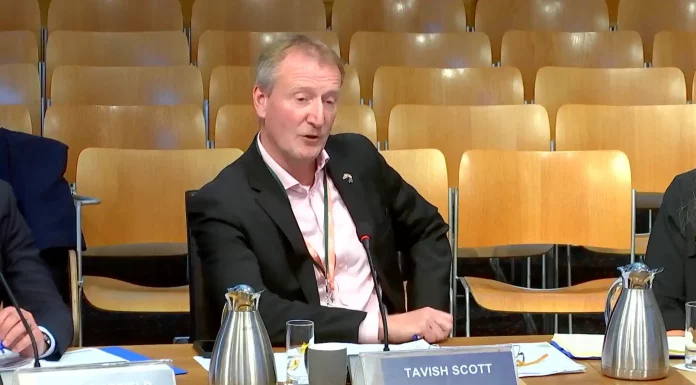
Salmon Scotland chief executive Tavish Scott said MSPs in the next parliamentary session should carry out a full investigation into how wild salmon are managed and the environmental pressures affecting the species.
The call follows evidence given to Holyrood’s Rural Affairs and Islands Committee by Fisheries Management Scotland chief executive Dr Alan Wells, who told MSPs he would welcome a further inquiry into wild salmon management.
“I would be happy if the committee decided to recommend in its legacy report that there should be a further investigation into how we manage wild salmon,” Wells said during the committee session on 25 February.
Wild Atlantic salmon populations have declined across Great Britain in recent decades. The International Union for Conservation of Nature (IUCN) recently reclassified the species from “near threatened” to “endangered”.
Scottish Government data show wild salmon catches fell by around 40 percent in 2025. Numbers declined by 43 percent on east coast rivers including the Tay, Tweed and Dee, and by 29 percent on west coast rivers.
The Scottish Government has identified more than 40 pressures affecting wild salmon, including climate change, habitat degradation and changes in marine survival.
Wells also told the committee that Fisheries Management Scotland has recommended introducing a rod licence for anglers as part of the national wild salmon strategy, a proposal now under consideration by the Scottish Government.
Scott said salmon farmers support the idea of a rod licence, which is used in several other salmon fishing nations and can generate funding for conservation work while improving catch data.
“We agree with Dr Wells that the next Parliament should carry out a full inquiry into the future of wild salmon in Scotland’s rivers,” Scott said.
“We also support his call for a rod licence to be introduced to help improve data and support conservation.”
Industry-funded initiatives have contributed to a range of wild salmon conservation projects. Salmon Scotland said more than £635,000 has been invested through its Wild Fisheries Fund in projects aimed at restoring habitats and supporting wild salmon populations, with a further £230,000 planned for 2026.
Projects supported by the fund include dam repairs in the Western Isles, riverbank stabilisation work in Argyll, habitat improvements in Ayrshire burns and monitoring at the Tournaig trap in Wester Ross.
The salmon sector has also contributed £560,000 to the West Coast Tracking Project, a research initiative led by the Atlantic Salmon Trust, Fisheries Management Scotland and the Scottish Government examining wild salmon migration patterns.