

Scottish Sea Farms orders £1.8m workboat for Billy Baa project.
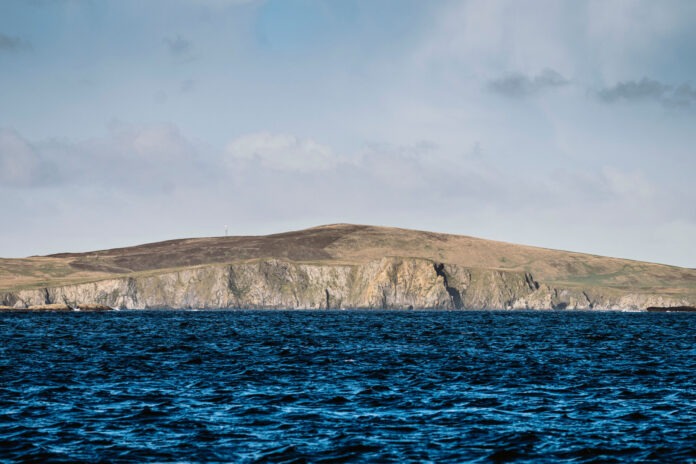
Scottish Sea Farms says it is to begin stocking what it describes as Scotland’s largest salmon farm to date at Billy Baa in Shetland, in May 2026.
The company said Billy Baa has a biomass consent of 4,091 tonnes and is expected to create eight full-time jobs. It forms part of Scottish Sea Farms’ strategy of developing larger farms in what it considers better locations, including deeper waters and faster currents.
Under the planned configuration, the site will operate nine 160 metre pens, which the company said are the first of this size in Shetland, plus one 120 metre pen.
Richard Darbyshire, regional manager for Shetland, said the average depth at Billy Baa is 45 metres.
“With the depths at Billy Baa and the new 160m pens, our fish will have more room than ever to grow,” he told The Source. “These larger pens in larger grids improve the water flow through the farm and lead to better performance and survival.”
Scottish Sea Farms put total investment in the site at £7.5 million, and said most of the spending has been placed with Scottish suppliers. It said a £1.8 million workboat is being built by MacDuff Ship Design, while pens and moorings are being supplied by Inverness-based Gael Force Marine.
The company said the site will use SeaQurePen 500 pens designed for Shetland operating conditions. It also said it has installed a double netting system, with a 75mm mesh outer net and an 18mm mesh inner net, plus a “glider” system intended to maintain net tension.
ScaleAQ in Scotland supplied cameras and a 500 tonne steel feed barge, which Scottish Sea Farms said is its largest to date. The company said the barge will use a Fjord Marine Hybrid system from Fjord Maritime.
“We are installing a Fjord Marine Hybrid system from Fjord Maritime, to power the feed barge,” Darbyshire said. “We trialled the technology on one of our existing farms and made fuel and maintenance savings worth £250,000, so have decided to increase the size to give even greater savings and reliability.
“We will also be using the latest ultra- high-definition feed cameras, along with a new motorised feed spreader that will reduce power consumption and increase feed spread and availability.
“The sector is constantly evolving and our aim is to reduce the carbon footprint of the salmon we produce even further.”
Scottish Sea Farms also set out measures it said are being implemented across its Shetland operations to manage fish health and welfare risks, including those linked to higher sea temperatures and gill health.
Robbie Coutts, area manager west Shetland, said the farms recorded their warmest seawater temperatures on record, with several weeks in summer 1.5°C above the seasonal norm, and said this can create water quality and oxygen challenges and accelerate AGD development.
“We have a sophisticated water quality analysis lab in Lerwick, and we’ve implemented a daily water quality monitoring protocol on every Shetland site, with a traffic light system to warn the farms of high plankton and micro jellyfish numbers when detected,” Coutts said.
He said the company is using aeration technologies to draw colder deep water to the surface during such events, and that it has increased wellboat capacity for freshwater reverse osmosis treatments for AGD and sea lice, citing 2,500m3 and 2,200m3 vessels operating in Shetland. Coutts also said that, over the past 12 months, the company added FLS delousing capability to these wellboats.
The company said its longer-term plans include increasing smolt transfer size from around 130g to shorten the marine production cycle and reduce handling events. It also said it is assessing opportunities to move further offshore, and identified Fish Holm in the Setterness area, an existing farm it is considering expanding.
“We have identified some potential sites that show promise, including Fish Holm in the Setterness area, an existing farm which we are looking to expand,” Darbyshire said. “The hydrodynamics are extremely favourable and are very similar to the strongly flushed farms in Orkney that have produced solid farming results”