

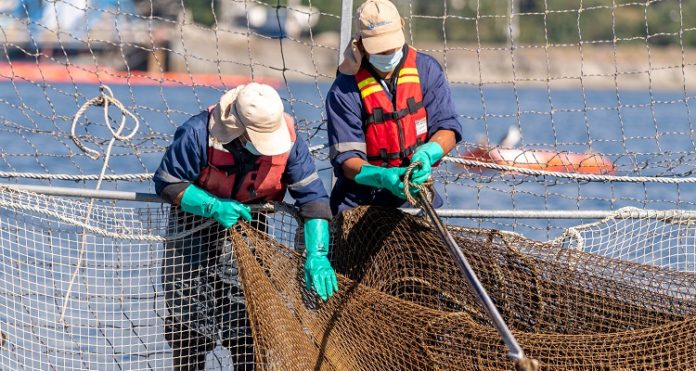
Chile’s fisheries authority, Servicio Nacional de Pesca y Acuicultura (Sernapesca), held a coordination meeting with salmon producers and aquaculture service providers on April 8 to address an ongoing harmful algal bloom (HAB) in southern Chile.
The bloom, caused by the microalgae Heterosigma akashiwo, has been present since March and is affecting 11 farming sites located in Salmonid Concession Groups (ACS) 1 and 2 in the Reloncaví Sound. All affected sites have activated their preventive HAB action plans.
Under an existing aquaculture pre-alert, Sernapesca has authorised fish transfers to other farming locations, emergency harvests, and extended holding periods at storage centres. The meeting reiterated procedures for operators to submit requests for these measures to the regulator in the coming weeks.
Representatives from the Chilean Navy Directorate of Maritime Interests and Aquatic Environment and the Undersecretariat for Fisheries and Aquaculture also attended the meeting. The agencies are coordinating their response through the Inter-Institutional Environmental Contingency Committee (CIICA).
Sernapesca aquaculture deputy director Mónica Rojas said the current conditions may coincide with a stronger El Niño cycle.
“The current scenario anticipates the arrival of El Niño with greater intensity, similar to previous years when there was significant impact on farming centres,” Rojas said.
HAB risk in Chile’s main salmon farming regions typically increases between autumn and winter. With El Niño conditions expected to strengthen, operators in Los Lagos Region and Aysén Region have been advised to monitor bloom development and maintain updated contingency plans.