

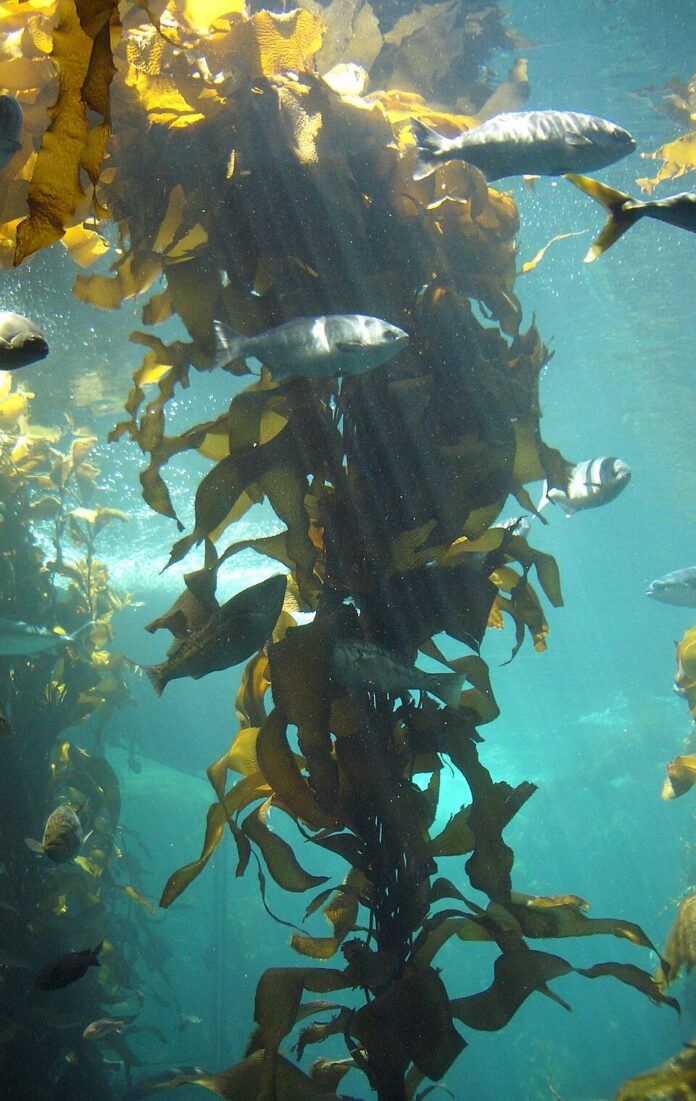
Atlantic salmon farmed alongside sugar kelp in Bantry Bay transferred measurable nutrients to the seaweed crop in a commercial-scale integrated multi-trophic aquaculture (IMTA) system, according to a new peer-reviewed study published in Scientific Reports.
The paper, titled Stable isotope analysis suggests nutrient connectivity between salmon and kelp within a commercial scale open coast integrated multi-trophic aquaculture system, was authored by researchers from University of Stirling, Bantry Marine Research Station and the Scottish Universities Environmental Research Centre.
Researchers used stable isotope analysis and Bayesian mixing models to trace nitrogen sources in sugar kelp (Saccharina latissima) tissue. They found significant shifts in nitrogen isotope signatures after salmon production began, indicating uptake of aquaculture-derived nutrients including uneaten feed and faecal waste.
The trial benefited from a two-year comparison. The site operated with kelp only in 2023, before salmon were introduced alongside kelp in 2024. That allowed researchers to compare nutrient dynamics and crop performance between the two production systems.
Kelp cultivated alongside salmon in 2024 showed improvements in blade length, width, wet weight and tissue nitrogen content compared with the previous kelp-only year, the paper said.
The authors said stable isotope methods could strengthen IMTA assessments by helping confirm whether observed growth responses are directly linked to fish farming nutrients, rather than background environmental variation.
The findings are likely to support growing industry interest in IMTA systems as salmon producers examine ways to reduce nutrient emissions and generate secondary seaweed revenues.