

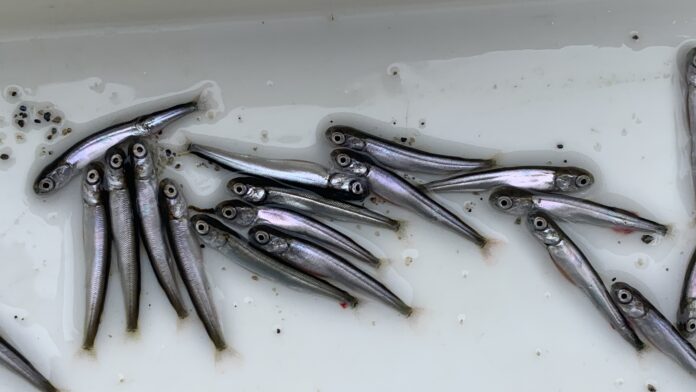
Pink salmon fry in northern Norwegian rivers are feeding on the same insects as native salmon and trout, according to a new study led by researchers at Norway’s Institute of Marine Research (HI).
The findings suggest juvenile pink salmon, also known as humpback salmon, may compete with native species for food during their brief freshwater phase before migrating to sea.
Researchers examined 431 juvenile pink salmon collected from ten rivers in Nordland, Troms and Finnmark during the 2022 migration season. Of those, 58 had consumed insects including mayflies, stoneflies, caddisflies and biting midges.
“We found the exact same diet that salmon fry and brown trout have in the river,” HI researcher Kathy Dunlop said.
At the same time, researchers also found evidence that native fish were feeding on pink salmon fry. Whole humpback salmon larvae were identified in the stomachs of four native salmonids, while isotope analysis indicated larger salmon and trout in the Skallelva and Vesterelva rivers had also consumed pink salmon eggs or larvae.
The researchers said the invasive species may therefore act as both competitor and prey within river ecosystems.
Pink salmon return to northern Norwegian rivers in large numbers every second year. After spawning in late summer, the adults die in the river, while juveniles emerge in spring and migrate rapidly to sea.
The study was published in the journal Ecology of Freshwater Fish.