

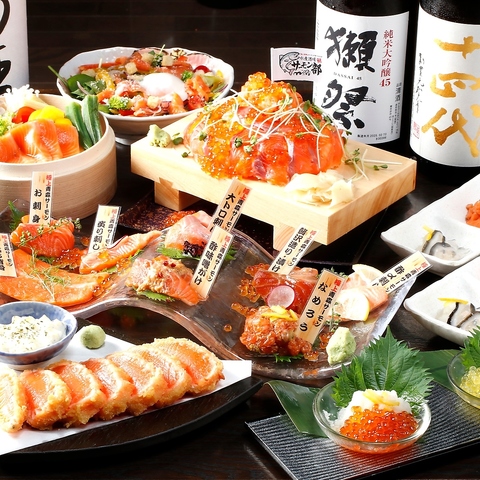
A salmon-only izakaya has opened in one of Greater Tokyo’s highest-traffic rail nodes, betting that Shin-Yokohama’s mix of Shinkansen passengers, commuters and surrounding office demand can support a single-brand concept.
The restaurant, Suisan Sakaba Salmon-bu Shin-Yokohama Ekimae, opened on 8 September in the entertainment district outside JR Shin-Yokohama Station, a stop on the Tokaido Shinkansen and a key interchange for local and regional lines. The operator says the site has delivered steady footfall over its first three months.
The venue is run by Wakachiku, a restaurant group that operates 15 outlets across Kanagawa Prefecture and Tokyo. President Masahide Taguchi said the company’s decision to expand in Shin-Yokohama followed the launch of a tuna-focused sister concept in October 2024, which he said had become established. He then decided to develop a specialist salmon format.
Rather than building the menu around multiple origins, Wakachiku narrowed its procurement to a single farmed trout brand, “Aomori Salmon”. Taguchi said the company tested 12 salmon and trout products from Japan and overseas in a blind tasting, with 22 employees voting. Staff selected Aomori Salmon unanimously, citing fish size, firm flesh and strong fat content, alongside perceived sweetness and umami.
With no existing trading relationship, Taguchi approached the producer, Japan Salmon Farm in Fukaura, Aomori Prefecture, and visited its operations in mid-July, touring farming and processing over two days.
Japan Salmon Farm was launched by parent company Okamura Food Industry in 2016, with Japan Salmon Farm established in 2017 to run aquaculture operations and a local processor, Aomori Kaizan, handling processing and shipment.
The first commercial shipments in 2018 were about 70 tonnes. Output has since expanded to 3,475 tonnes this year, which the Mainichi described as among the country’s leading production levels.
The producer’s model spans freshwater and marine stages over roughly 18 months from hatch to shipment. Eggs are hatched in land-based facilities in Fukaura and Imabetsu each November, juveniles are moved to intermediate farms in March and grown through autumn in freshwater, and fish are then transferred to sea sites in Fukaura, Imabetsu and Sotogahama. Harvest fish are processed in Aomori, bled and shipped chilled at around minus 0.5C.
Director Daisuke Okamura said the company has set a target of producing more than 12,000 tonnes a year within five years, while acknowledging the scale gap with Norway’s largest producers.
At store level, Taguchi said the Shin-Yokohama site purchases about 500kg of Aomori Salmon a month. The menu includes core formats such as sashimi and salmon roe, plus items positioned as specialist bar snacks, including hizu namasu and salmon skin crackers. Taguchi also said the company is considering opening a second outlet in Tokyo.