

Inland Fisheries Ireland launches RiverWood project to restore salmon habitat in Galway and beyond.
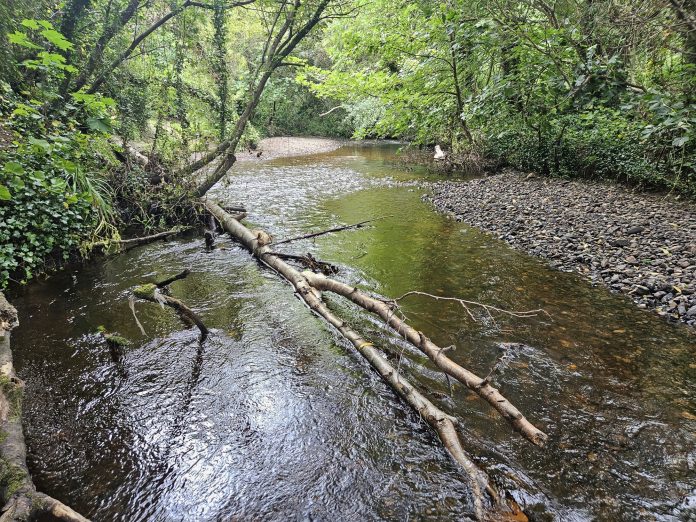
Inland Fisheries Ireland is introducing large wood structures into rivers in Galway and other counties as part of a habitat restoration initiative aimed at supporting salmon, trout and lamprey populations.
The RiverWood project will see naturally sourced timber, including fallen trees, diseased trees likely to fall and certain non-native bank-side species, placed in selected river channels to replicate natural woody debris systems.
Project sites include rivers in tributaries of Lough Corrib in Co Galway, as well as locations in Dublin, Meath and Wicklow, and the Ballisodare river in Co Sligo.
IFI said the reintroduction of large wood can provide reef-like foraging structures, refuge from predators, shelter during low summer flows and winter floods, and improved habitat complexity to support spawning and fish development throughout their life cycle.
Fiona Kelly, Head of Research, Policy and Risk at Inland Fisheries Ireland, said reintroducing large wood is increasingly used internationally as a river restoration approach.
“IFI’s new RiverWood project will provide important insights into the ecological value of large wood in Irish rivers, and its effectiveness as a habitat restoration tool for key species,” she said.
Kelly added that the project will also gather stakeholder feedback and examine potential tensions between ecologically complex rivers and historically engineered, straightened channels.
IFI, working in partnership with Coillte, has already completed restoration works on the River Vartry in Devils Glen, Co Wicklow, and on a tributary of the River Boyne in Co Meath.
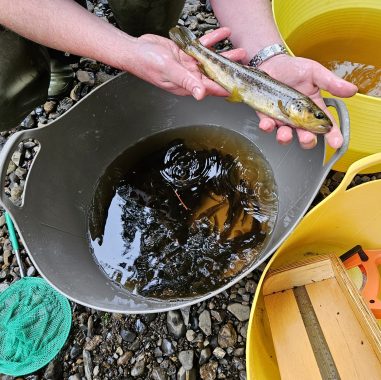
Target rivers support populations of brown trout, sea trout, Atlantic salmon and lamprey. IFI is monitoring fish responses to the measures in collaboration with staff from University College Dublin.
The project is funded through the EPA Research Programme and involves collaboration with Coillte, private landowners, the Office of Public Works and South Dublin County Council.