

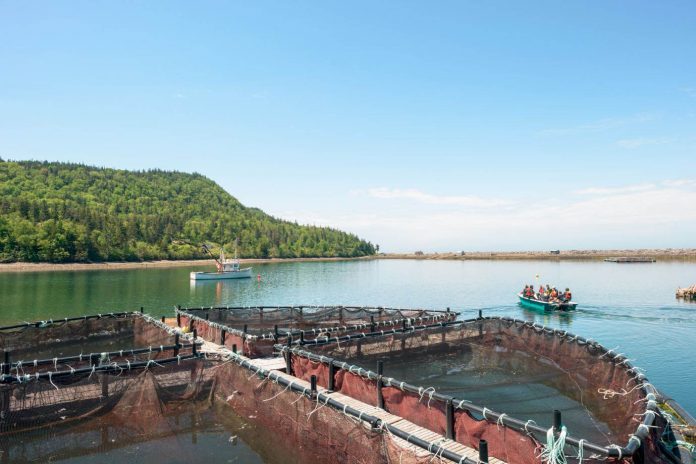
A marine-rearing strategy used in a long-running effort to restore endangered Atlantic salmon in Canada’s Bay of Fundy produced fish that generated more than four times as many offspring as salmon reared in freshwater hatcheries, according to a new peer-reviewed study.
The research, published in Fisheries Research, examined the Fundy Salmon Recovery programme, which aims to rebuild populations of inner Bay of Fundy Atlantic salmon, one of North America’s most endangered salmon populations.
The programme captures wild smolts as they leave their natal rivers, rears them to maturity and releases them back into the wild to spawn naturally. Researchers used genetic analysis to assess which restoration methods were most effective at producing wild-born offspring.
They found that salmon reared in marine net pens produced 4.1 times more offspring per individual than fish reared to adulthood in a freshwater hatchery. The study also concluded that the restoration effort had increased juvenile salmon abundance and helped maintain genetic diversity within the population.
The marine-rearing component of the programme takes place at a conservation farm in Dark Harbour, New Brunswick. The authors describe the site as the world’s first marine conservation farm for wild Atlantic salmon.
The researchers said the findings suggest restoration programmes should focus on producing fish that are as fit as possible and prioritise approaches that encourage natural spawning in the wild. They also noted that the benefits observed may be linked to the more natural marine-rearing environment compared with conventional hatchery systems.
The study was conducted by researchers from the University of New Brunswick, Parks Canada and Fisheries and Oceans Canada.