




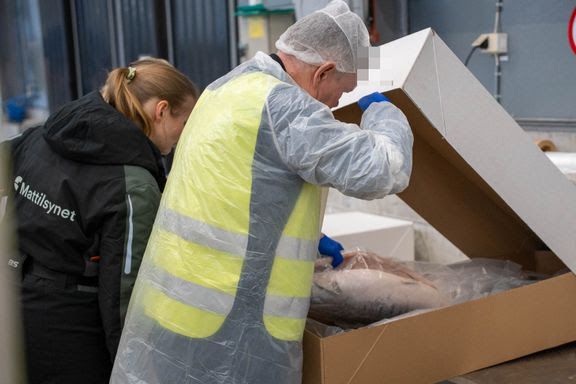
Norwegian authorities inspected 85 fish transports and more than 60 seafood consignments during coordinated winter control operations targeting the seafood transport and export sector, uncovering regulatory breaches across several areas.
The inspections were carried out through Norway’s inter-agency anti-crime cooperation programme, involving the Norwegian Tax Administration, Norwegian Customs, Norwegian Food Safety Authority, Norwegian Labour Inspection Authority, Norwegian Public Roads Administration and Norwegian Directorate of Fisheries.
Controls covered seafood companies, cold and frozen storage facilities, and fish transport operations crossing the Norwegian borders at Bjørnfjell and Svinesund.
Authorities said approximately half of Norwegian seafood exports are transported by road.
The inspections identified repeated cases of blood water leakage during transport. Several vehicles were issued driving bans by the Norwegian Public Roads Administration until the leakage stopped.
Authorities also identified indications of illegal trailer swapping involving multiple transport vehicles.
The Food Safety Authority said several cold storage operators had inadequate systems for documenting fish traceability, including origin and delivery destination records. Two companies have received notices of potential enforcement action.
The agency also imposed a sales ban on one consignment containing visibly sexually mature fish deemed unsuitable for sale due to poor quality.
At border crossings, authorities repeatedly found transporters lacking documentation showing where fish had been collected or where shipments were destined.
The Labour Inspection Authority reviewed drivers’ pay and working conditions, including compliance with Norwegian minimum wage rules linked to cabotage and third-country transport operations. Follow-up supervisory cases have been opened.
“The majority of operators in the industry are serious and comply with regulations, but the controls show there is still a need for close and coordinated enforcement,” said Erik Nilsen, head of the steering group for the anti-crime cooperation programme.
“The transport and seafood industries are characterised by complex production and value chains, often involving global corporate structures. This makes the industry vulnerable to regulatory breaches,” he added.
Authorities said several agencies are continuing to review documentation collected during the operations.
