

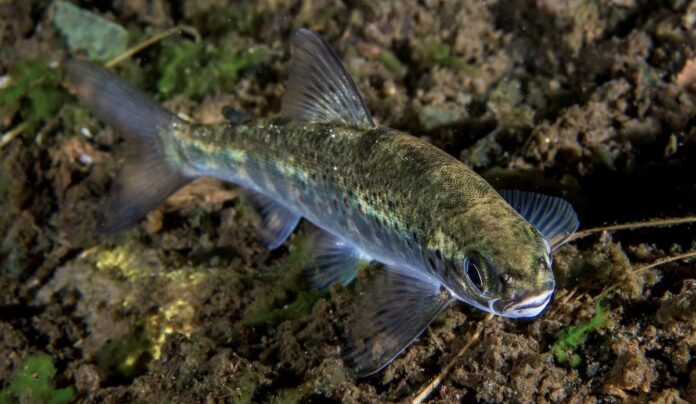
A Norwegian monitoring programme found very low levels of virus and bacterial infections in migrating wild Atlantic salmon during 2025, according to a new report from the Norwegian Institute of Marine Research.
Researchers examined 200 migrating post-smolt salmon collected from fjords in western and northern Norway and detected infection in only two fish.
Both positive detections were linked to piscine myocarditis virus (PMCV), the pathogen associated with cardiomyopathy syndrome (CMS), a chronic disease affecting farmed salmon. Researchers said the virus levels detected were very low.
The survey found no evidence of infection from piscine orthoreovirus 1 (PRV-1), which is associated with heart and skeletal muscle inflammation (HSMI), or Renibacterium salmoninarum, the bacterium that causes bacterial kidney disease (BKD).
The monitoring programme covered salmon migrating through areas with significant aquaculture activity, including production areas in Ryfylke, Hardangerfjord, Sognefjord and Altafjord.
Researcher Abdullah S. Madhun said the findings suggest limited transmission of these pathogens to migrating wild salmon.
“We generally find very few fish infected with the pathogens we investigate,” Madhun said.
However, he cautioned that the programme primarily samples live fish and cannot rule out the possibility that infected fish die before entering the monitoring programme.
The monitoring work was carried out on behalf of the Norwegian Food Safety Authority and forms part of Norway’s national surveillance programme for salmon lice and wild salmon health.
The findings are published in the report Annual report on health monitoring of wild anadromous salmonids in Norway 2025, released by the Institute of Marine Research.