




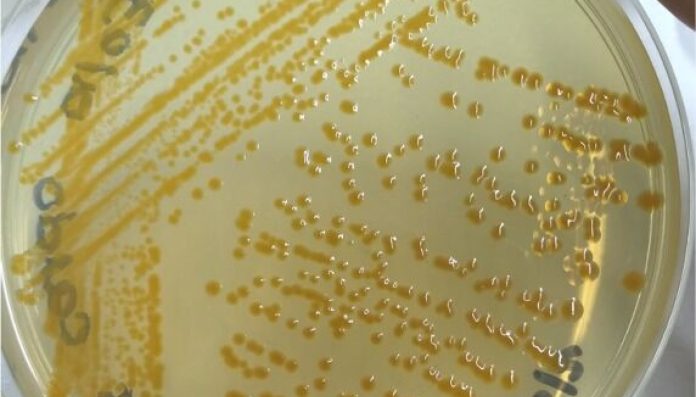
Scientists in Chile have identified and characterised a new bacterial species isolated from water used in Atlantic salmon alevin cultivation, naming it Flavobacterium maulense.
Researchers from Universidad Andrés Bello, Universidad Bernardo O’Higgins and Centro Incar identified the strain, designated T-16T, using genetic, physiological and lipid-profile analysis. The bacterium shows yellow pigmentation and gliding motility.
Phylogenetic analysis confirmed the organism belongs to the Flavobacterium genus but differs sufficiently from related species, including F. tiangeerense, F. bizetiae and F. frigoritolerans, to justify classification as a new species.
The discovery follows the identification of another new species from the same genus, Flavobacterium facile, by the same research team in 2024, expanding the known microbial diversity associated with Chilean aquaculture systems.
Laboratory tests showed the bacterium grows at 18–25°C, neutral pH and without additional salt, conditions similar to freshwater environments used in early-stage salmon production.
Another member of the genus, Flavobacterium psychrophilum, is already a leading cause of infectious mortality in Chilean freshwater salmonid facilities.
The researchers said the findings expand understanding of microbial diversity in aquaculture systems and may have implications for sanitary and environmental management in salmon farming. The pathogenic potential of F. maulense remains under investigation.
