

Salmon Tasmania has launched a social media campaign featuring real residents whose livelihoods depend on the state’s Atlantic salmon sector, pushing back against sustained criticism of the industry.
The “Tasmanians depend on salmon” campaign comprises seven 90-second videos for social media. Each features an unscripted Tasmanian — truck drivers, a hardware store owner, a café couple, a minister — speaking to the sector’s role in their working lives.
A Deloitte report cited by Salmon Tasmania found the industry supports 5,103 full-time equivalent jobs. Nine out of ten are in rural areas, spanning the Huon Valley, the west coast, and communities as far north as Westbury.
“The public debate about salmon farming rarely includes the voices of the thousands of Tasmanians whose livelihoods depend on the industry,” Salmon Tasmania writes on its website.
The campaign covers a wider employment base than primary production alone. Salmon Tasmania lists electricians, veterinarians, marine scientists, hatchery technicians, and the teachers and doctors whose communities depend on the sector’s presence.
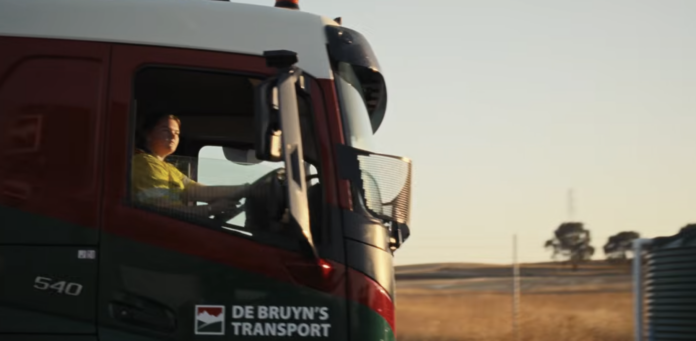
One video features identical twins Porcha and Piper, truck drivers for De Bruyn’s Transport, which employs around 350 staff and operates roughly 180 trucks. “Without the Tasmanian fish farms, De Bruyn’s would really suffer,” says Piper.
Café owners Roz and Brett, who employ 15 people in the Huon Valley, say their business would likely not exist without fish farm workers as customers. “If we lose salmon, we lose regional Tasmania,” says Roz.
Salmon Tasmania represents the state’s three Atlantic salmon producers: Huon, Petuna, and Tassal. The campaign runs as political and community pressure on the sector continues to build in Tasmania.