

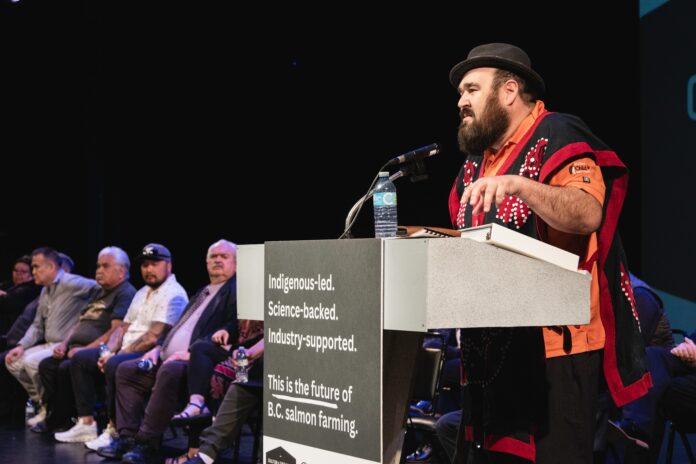
A coalition of coastal First Nations in British Columbia has urged the federal government to reverse the planned 2029 ban on open net pen salmon farming, warning the policy risks undermining investment, employment and food security in remote communities.
At a press conference in Ottawa on Tuesday, Chiefs from the First Nations for Finfish Stewardship Coalition (FNFFS) said the current policy framework is already prompting aquaculture companies to scale back operations, with knock-on effects for jobs and local economies.
The group said clarity is needed ahead of the next salmon production cycle, which begins in June 2026. Without changes to policy, companies face either proceeding with production that may need to be culled in 2029 or halting production altogether, with immediate employment impacts.
The coalition outlined a plan to expand Indigenous equity participation in the sector and increase local control over aquaculture operations. Proposals include the development of an Indigenous-led aquatic health sciences centre, a stewardship fund financed through industry contributions, and increased First Nations ownership across the aquaculture value chain. The group also called for First Nations-issued aquaculture licences from 2029.
The BC salmon aquaculture sector generates an estimated CAD 1.12 billion in annual economic activity, including CAD 483 million in GDP, and supports more than 4,000 jobs, according to figures cited by the coalition. Around two-thirds of the workforce is under the age of 35, with more than 1,000 First Nations employees earning a combined CAD 59.9 million annually.
“Maintaining jobs that grow Canadian food for Canadian families should be a priority for the Government of Canada,” said Dallas Smith, spokesperson for the FNFFS and a member of the Tlowitsis First Nation.
Isaiah Robinson, Deputy Chief Councillor of Kitasoo Xai’Xais Nation, said the policy is already affecting coastal communities, where aquaculture represents a significant share of local economic activity.
Industry participants also backed the coalition’s position. Cermaq CEO Steven Rafferty said First Nations leadership has been central to the development of the sector, while Mowi CEO Ivan Vindheim said the current policy has affected investment and increased reliance on imported salmon.
The FNFFS said its proposals align with federal priorities around economic reconciliation, investment and job creation, and called on the government to provide policy certainty to enable continued development of the sector.