




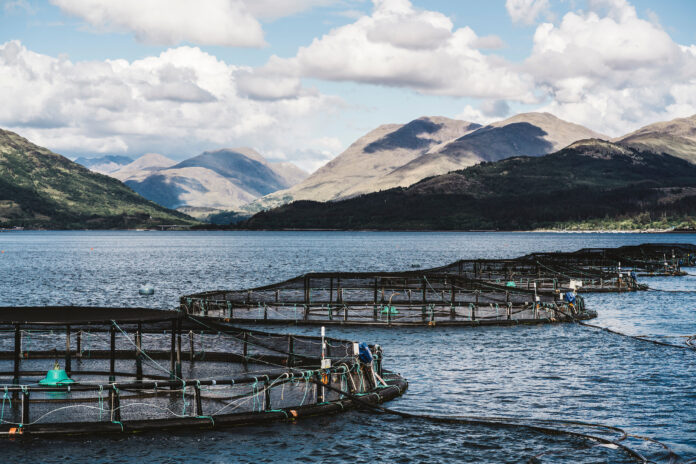
Scottish Sea Farms weighs on SalMar results.
SalMar ASA reported a weak contribution from its Scottish joint venture, Scottish Sea Farms, in the fourth quarter of 2025, driven by biological challenges that reduced harvest volumes, increased costs and lowered price achievement.
Scottish Sea Farms, operated through the Norskott Havbruk joint venture and reported on a 100% basis, harvested 5,500 tonnes gutted weight in the fourth quarter, down from 9,000 tonnes a year earlier. Operating revenues fell to NOK 575 million ($57.5 million) from NOK 965 million ($96.5 million).
Operational EBIT for the quarter was NOK -186 million ($-18.6 million), compared with NOK 93 million ($9.3 million) in the same period of 2024. EBIT per kilo declined to NOK -33.8 ($-3.38), from NOK 10.3 ($1.03) a year earlier. SalMar’s share of the joint venture’s result after tax was NOK -86 million ($-8.6 million) in the quarter.
SalMar said the weak performance followed biological challenges at a number of Scottish sites, primarily linked to AGD-related gill health issues. These incidents led to elevated mortality and a lower average weight of harvested fish, which in turn affected both costs and realised prices. The company said operational and biological performance improved towards the end of the period.
For the full year 2025, Scottish Sea Farms harvested 32,800 tonnes, compared with 40,400 tonnes in 2024. Full-year operational EBIT was NOK -128 million ($-12.8 million), versus NOK 555 million ($55.5 million) the year before.
Reflecting the challenges, SalMar has reduced 2026 harvest guidance for Scottish Sea Farms by 2,000 tonnes to 43,000 tonnes on a 100% basis. Group volume guidance for Norway, SalMar Ocean and Iceland remains unchanged. For 2026, SalMar guides for harvest volumes of 270,000 tonnes in Norway, 5,000 tonnes in SalMar Ocean, 21,000 tonnes in Iceland, and 43,000 tonnes in Scotland, implying around 6% growth year on year including SalMar’s share of the joint venture.
SalMar said it continues to see significant untapped organic growth potential across its value chain. Including expected volumes from the Wilsgård merger, the company estimates longer-term volume potential of 316,000 tonnes in Norway, 13,000 tonnes in SalMar Ocean, 26,000 tonnes in Iceland, and 45,000 tonnes in Scotland on a 100% basis, corresponding to a total group volume potential of around 378,000 tonnes, including its share of Scottish Sea Farms.
