




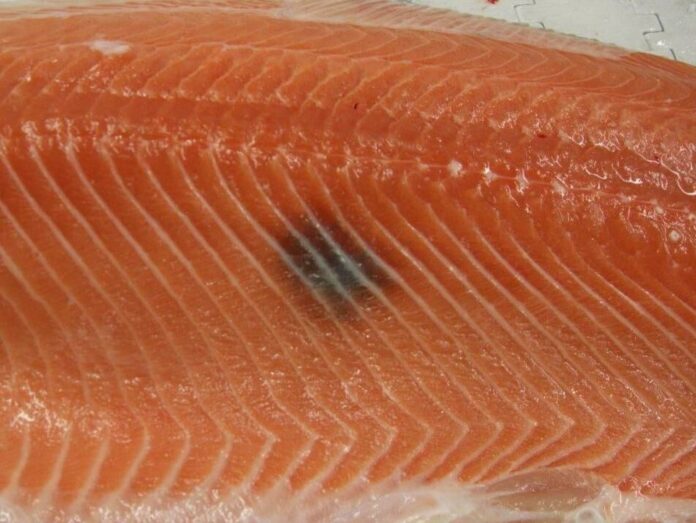
Norwegian scientists have identified internal biological processes — not mechanical trauma — as the likely primary cause of melanosis in Atlantic salmon fillets, according to a new study from a deep-sea production site.
The research examined the development of red focal changes (RFC) and their progression to melanized focal changes (MFC) in fish raised in submersible cages, where human handling is minimal. That setting allowed researchers to largely rule out mechanical stress as a trigger.
Histological analysis of ventral fillet discolorations — red, black, or mixed — taken at harvest (average weight 3.3 kg) revealed that RFCs are characterised by haemorrhage, adipose tissue necrosis, and lipid release. MFCs showed persistent granulomatous inflammation, pigmented macrophages, and pseudocystic structures, pointing to a progressive fat necrosis process.
“The strong association with adipose tissue suggests that endogenous processes — related to lipid metabolism, tissue vascularisation, local hypoxia, or nutrition — play a fundamental role,” the scientists said.
The key finding: lesions developed without intensive handling. The authors concluded that handling-related trauma is not necessary to initiate the injury.
Researchers also monitored dissolved oxygen levels throughout the production cycle. Low pre-harvest oxygen levels may worsen hypoxic conditions in affected tissue, though the scientists said that specific relationship requires further investigation.
The study, titled “Melanized Focal Changes in the Fillets of Farmed Atlantic Salmon: A Clinical Report From a Deep-Sea Production Site,” shifts focus toward intrinsic biological factors in melanosis pathogenesis. Further work on nutritional and vascular contributors will be needed to translate these findings into production-level interventions.