




Claims made by an anti-farmed salmon campaign have been disputed by an aquaculture researcher.
The “Off the Table” campaign, led by WildFish and supported in Canada by groups including Atlantic Salmon Federation, is urging restaurants to remove farmed salmon from menus.
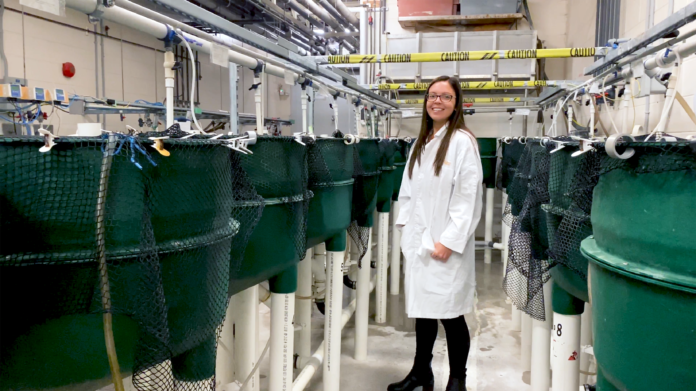
Stefanie Colombo, Canada Research Chair in aquaculture and nutrition at Dalhousie University, told CBC that several of the campaign’s claims are not supported by current research, according to reporting by CBC News.
“The statement that farmed salmon has more omega-6 than omega-3 is not true,” Colombo said, adding that omega-3 levels depend primarily on species rather than whether the fish is farmed or wild.
On the use of pigments in farmed salmon, she said: “They do require a source of that pigment in their diet, just like salmon in the wild do… That is not something to be of concern to any consumers.”
Colombo also rejected suggestions of nutritional differences in protein content. “The protein level does not depend on whether it’s wild or farmed. It depends on the species of salmon,” she said.
Addressing contaminant concerns, she said levels of PCBs, dioxins and mercury are “dramatically lower in farmed salmon compared to wild salmon,” reflecting changes in feed composition and controlled farming conditions.
“Nova Scotians should have zero concern about consuming farmed or wild salmon in their diet in terms of contaminant levels,” Colombo added.
The campaign describes farmed salmon as a “factory product,” a characterisation Colombo dismissed. “I find that term factory to be very strange considering we live in a world of modern agriculture,” she said.
