




Belgium company Pittman Seafood specialises in frozen salmon. “To be able to meet growing global demand, and at the same time offer variety to customers, frozen fish is a good – and sustainable – addition.”
Pittman Seafood was founded in 1990 by Dirk Vandepitte. He had worked at Pieters Visbedrijf (now Marine Harvest Pieters) for ten years and used that experience to start his own seafood trading company with two financial partners.
Dirk Vandepitte started with the import of lobster from Canada, and shortly afterwards began importing seafrozen whole fish filleted in China. In 1994 the company moved to the current location at Zeebrugge harbour, near the Flanders fish auction. Both financial partners were bought out by 2004.


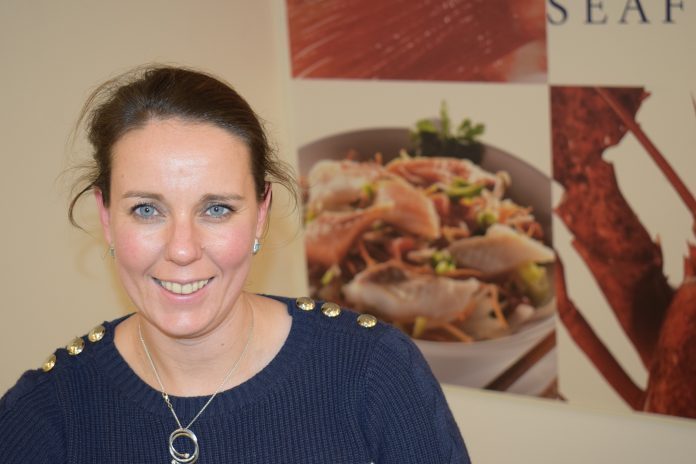
Yoke Vandepitte has a marketing background and started working for the company twelve years ago, after having worked at a fashion company and Coca Cola. “I intended to work for the company from the start, but first wanted to gain experience in other sectors on a multinational level.”
Vandepitte started in the sales department, then moved to purchase and taking up more responsibilities at the company. Beginning of last year, she was appointed as CEO by the board of directors. Dirk Vandepitte stayed on as chairman of the board.
It’s a fascinating sector to work in, according to Vandepitte. “It’s international and it’s about food, an essential product. I believe in what we do and how we do it. Frozen fish can have a negative connotation, but we see it as an advantage. We freeze our products when they are at their best.”
Conscious choice for frozen
Why only frozen products? “This was a natural development of our company. We built up knowledge from the start, and the fresh produce sector is very different. With frozen fish, you have good control over the whole product chain.”


Sustainability has been important to Pittman from the start of the company, she explains. “We still want to be able to sell our products for the next 20 years and over. We also want to be sustainable in our relationships with customers and suppliers. Sustainability is more than just the environment.”
Specialization
The most important customer groups for frozen salmon are foodservice, food industry, retail and smokehouses, in Poland, Spain, Germany, France, Belgium and the Netherlands.


Prices and perception
Both fresh salmon and frozen fish blocks are bought from various producers in Norway and Chile. “We need a lot of volume, so we buy from anyone who can meet our demand and specifications.”
Recent price fluctuations of salmon have, of course, influenced purchasing. “We have been looking at the prices closely, to be able to buy stock for freezing for our customers at the right time. As soon as prices go down, we call customers, who want to build stock until Easter, and freeze volume for them.”


Of course, the frozen food market is less sensitive to price fluctuations, but nevertheless, this has its impact, she says. “At the moment, contracts are being made for shorter periods of time, while retail, on the other hand, wants to set prices for a whole year.”
The perception of salmon has changed enormously in recent years, she notices. “So much has been done already by the industry to improve the farming process. There has been a tremendous development in the past years, with state- of-the-art farming methods, animal-friendly slaughtering and reduction of the use of antibiotics. This positive image has to be protected, and it’s important that the industry works together on this.”
