

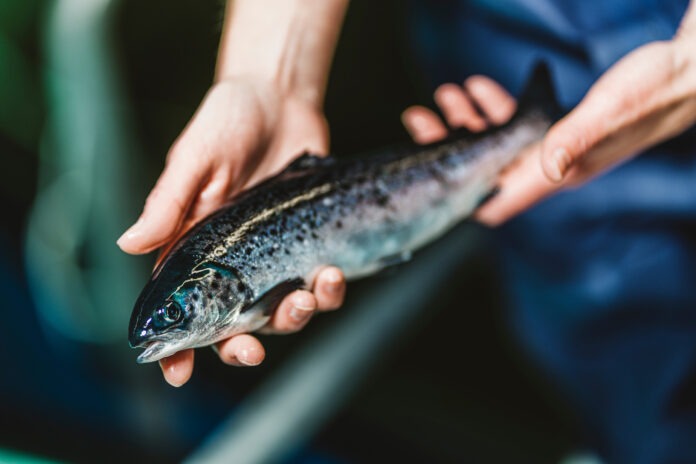
Norwegian researchers say Atlantic salmon raised under more natural freshwater conditions may perform better at sea than fish produced under accelerated commercial regimes.
A new study tracked 5.4 million Atlantic salmon smolts across 18 groups, following fish for more than 15 months from hatching to sea transfer. The smolts were raised in freshwater under near-natural light cycles and temperatures as low as 3°C, with researchers referring to them as “cold smolts.”
According to the study, these fish outperformed the regional average across several key production metrics. Mortality improved by around two percentage points to 74 percent, feed conversion ratio improved by 4 percent to 1.22, and the share of superior quality fish increased by up to four percentage points, the authors reported.
The researchers also observed improved marine-phase growth among fish raised in brackish RAS water at 12°C, which developed more muscle tissue compared with salmon raised at 14°C.
The authors argue that commercial salmon farming has increasingly relied on temperature and light manipulation to accelerate growth in the freshwater phase, potentially affecting fish physiology.
“A freshwater phase in which salmon are not produced as zero-year juveniles, but instead follow a more natural cycle, is likely an important direction toward a more sustainable salmon industry,” the study states.
The findings add to a growing body of research questioning whether smolt robustness can be optimised solely by increasing growth rates.