




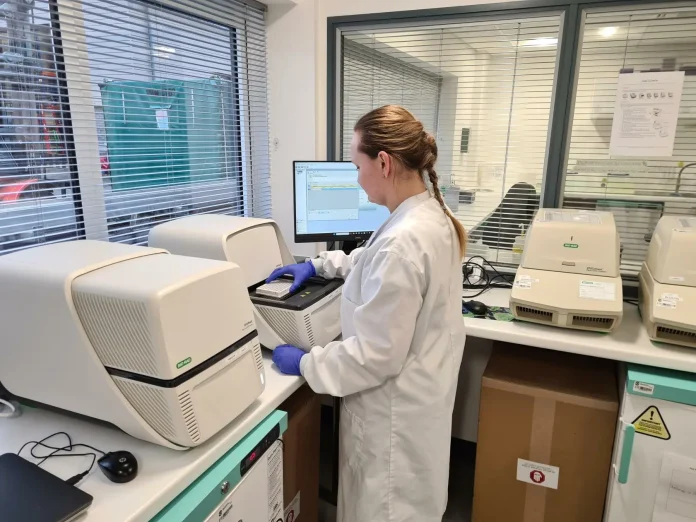
Mowi trials DNA-based seabed monitoring in Scotland.
Mowi has implemented DNA-based seabed monitoring at salmon farms in Scotland, marking a shift in how environmental compliance at aquaculture sites is assessed.
The company has been involved in developing environmental DNA (eDNA) methods since 2015, working with Applied Genomics and Benthic Solutions to test whether DNA sequencing could be used to predict seabed conditions beneath fish farms.
The research focused on whether DNA-derived biodiversity data could reliably estimate the Infaunal Quality Index (IQI), the metric used by the Scottish Environment Protection Agency (SEPA) to classify seabed health. According to Mowi, studies examining bacterial and eukaryotic microbiomes, alongside benthic meiofauna and invertebrates, demonstrated that DNA-based biodiversity patterns could anticipate traditional macrofaunal IQI classifications.
The datasets were subsequently used in wider sector research projects supported by the Sustainable Aquaculture Innovation Centre (SAIC), aimed at validating microbiome-based modelling approaches for regulatory use.
Two DNA-based monitoring approaches are now being used operationally at Mowi sites. One uses bacterial microbiome data aligned with IQI modelling for regulatory assessment, while the other integrates bacterial, meiofaunal and invertebrate signals to provide a broader ecological assessment of seabed conditions.
SEPA has now formally classified seabed surveys from three Mowi farm sites in Cheesebay using DNA-based assessment to determine environmental compliance.
The company said this represents the first time DNA-based monitoring has been used in Scotland for fish farm compliance assessments. Traditional seabed monitoring methods in aquaculture have remained largely unchanged since they were introduced in the 1980s.
Mowi said it committed to absorbing additional analytical costs during early regulatory submissions to support validation of the method and provide confidence for regulators.
According to the company, DNA-based monitoring can provide faster turnaround times than conventional macrofaunal analysis and may allow earlier detection of seabed trends during the production cycle.
