




Research from Nord University suggests insect meal and algae-based oils could partially replace imported soy and fish oil in salmon feed without harming growth or fish health.
The findings come from the university’s NON-Fôr project, which examined locally produced feed ingredients aimed at reducing the carbon footprint of Norwegian aquaculture.
Researcher Mette Sørensen said around 75% of the carbon footprint from feed production is linked to imported raw materials, particularly soy from Brazil.
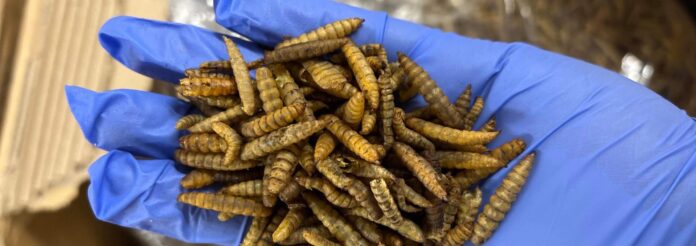
In one study published in Aquaculture, 520 post-smolt salmon were fed diets containing insect meal derived from black soldier fly larvae and mealworms.
The researchers found insect meal generally had no negative effect on growth, feed utilisation, health, or digestion of fat and energy. They concluded that inclusion levels of 5–10% black soldier fly meal and 15% mealworm meal performed well in salmon diets.
Nord University also said trials replacing 50% of fish oil with oil from the microalgae Schizochytrium improved gut, skin and gill structure, while increasing mucus cells and immune response.
Separate trials during the pre-smolt stage found no negative impact on growth or smoltification when fish oil was gradually replaced by algae oil.
The university said wider commercial adoption would depend on scaling up insect meal production, which remains more expensive than soy, but argued larger production volumes and improved technology should reduce costs over time.
The findings support ongoing industry efforts to increase the share of domestically produced feed ingredients in Norwegian aquaculture.
