




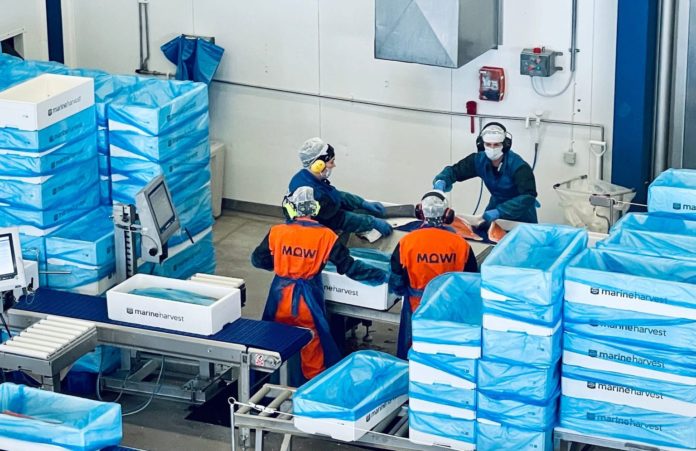
Study finds 7.3% salmon allergy sensitisation among Norwegian processing workers.
A study of Norwegian salmon processing workers has found that 7.3 percent show allergic sensitisation to salmon proteins, with mucus identified as a key exposure source.
The research, published in the journal Frontiers in Allergy, examined 977 workers in Norwegian salmon processing facilities to assess occupational allergy risk.
Researchers used skin prick testing and IgE antibody analysis to evaluate reactions to different salmon tissues. Fifty-six workers had at least one positive skin test, most commonly reacting to raw muscle extract, followed by mucus extract.
All sensitised workers showed IgE binding to proteins in at least one salmon extract, with mucus proteins showing binding in 100 percent of cases.
The study also recorded work-related symptoms in 43 workers, while 10 reported doctor-diagnosed asthma.
The research was conducted by scientists from University Hospital of North Norway and UiT The Arctic University of Norway.
The authors concluded that workers in salmon processing plants are exposed to multiple fish tissues containing proteins capable of causing allergic sensitisation, and that allergens beyond the primary fish allergen parvalbumin may play an important role in occupational exposure.
