Policy – July 17, 2026
Russia: first domestic salmon vaccine launched amid sanctions and supply disruption

Russia has begun introducing its first domestically developed vaccine for salmonids as the country seeks to reduce its reliance on imported veterinary products.
The vaccine was developed by Russia’s Federal Centre for Animal Health with another state research institute and is intended to protect salmon and trout against several commercially significant diseases, Russian industry publication Veterinary Science and Life reported.
“Until recently, there were no registered vaccines in Russia,” Vladimir Melnikov, head of the centre’s aquaculture disease reference laboratory, told the publication.
“The drug is designed to prevent several of the most significant diseases and is already being actively introduced into industrial use.”
The development forms part of Russia’s wider effort to replace foreign technology and production inputs following its invasion of Ukraine in 2022, which triggered extensive Western sanctions and the withdrawal of international suppliers.
Veterinary medicines are not subject to a blanket Western prohibition. However, European Commission guidance states that veterinary products do not benefit from some of the medical and pharmaceutical exemptions contained in EU sanctions rules. Wider restrictions affecting banking, transport, technology and trade can also complicate supplies to Russia. European Commission guidance
According to Melnikov, Russian aquaculture remains dependent on foreign veterinary products, particularly in Atlantic salmon and rainbow trout farming.
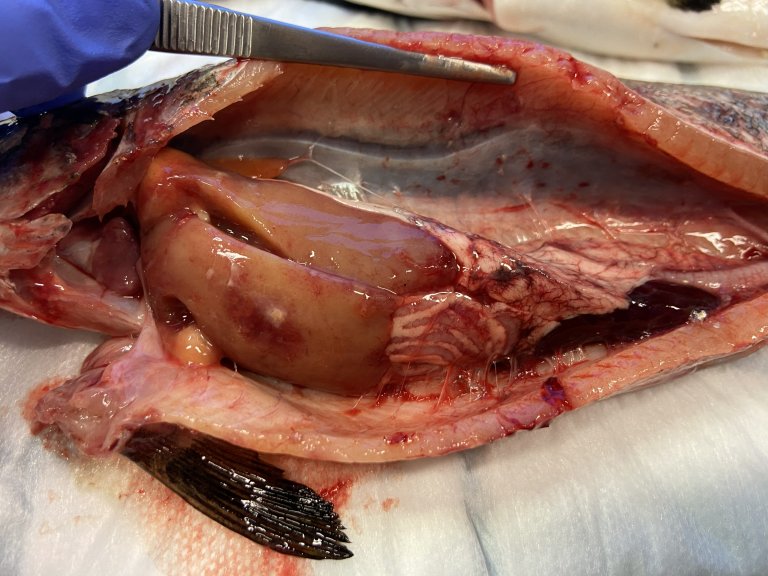
He identified furunculosis, vibriosis, cold-water vibriosis, winter ulcer disease and infectious pancreatic necrosis among the infections causing the greatest losses at Russian farms.
“In severe cases, outbreaks can lead to significant economic losses, including the destruction of fish batches and disruption of production cycles,” he said.
The vaccine programme comes as Russia attempts to raise total aquaculture production from approximately 388,000 tonnes to 600,000 tonnes by 2030. Those figures cover the country’s entire aquaculture sector rather than salmon farming alone.
Federal Agency for Fisheries head Ilya Shestakov has warned that production could plateau in 2026 without additional investment in technology, domestic breeding programmes and biosecurity.
Melnikov said further progress would require government support for research, greater domestic manufacturing capacity and closer cooperation between scientists and producers.