




Study examines lice-related mortality effects in wild Atlantic salmon.
New experiments with wild Atlantic salmon confirm earlier findings from farmed salmon showing that salmon lice infection reduces growth and increases mortality.
The results come from a study carried out by researchers at Havforskningsinstituttet, based on controlled laboratory trials using wild-caught salmon post-smolt.
The findings showed that wild salmon exposed to salmon lice had poorer growth and a lower condition factor than fish without lice.
“We also observed that fish with a high lice burden began to die once the lice reached the mobile pre-adult stage, when they are able to move around on the fish,” said PhD candidate David Pioch.
The researchers believe mortality rates in the wild are likely to be higher than those observed in the experiment.
“Fish kept in laboratory conditions are not exposed to threats such as predators or additional infections, and they are fed daily,” Pioch said. “This means they are better equipped to withstand a salmon lice infestation than wild salmon in nature.”
The trial was conducted to validate previous research on the effects of salmon lice, which has largely been based on farmed salmon or offspring of wild fish reared in aquaculture facilities.
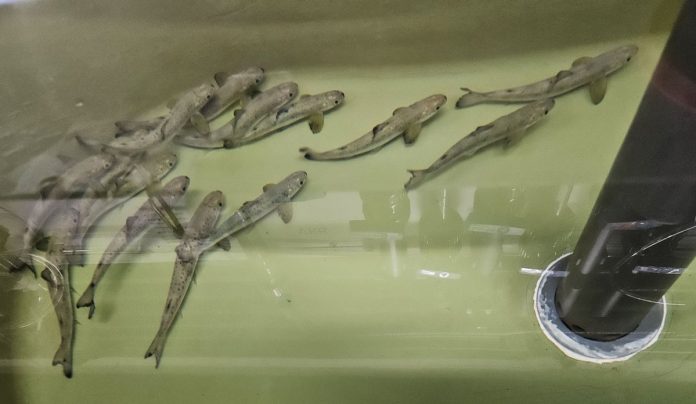
This was the first experiment of its kind conducted on wild-caught Atlantic salmon smolt captured as they migrated from rivers to the sea. A total of 47 smolt were caught at river mouths in two rivers in western Norway.
“Because it is difficult to catch sufficient numbers of wild salmon for experiments, and because of ethical concerns related to already reduced wild stocks, researchers usually rely on intermediate solutions,” Pioch said.
Such approaches typically involve offspring from wild broodstock that have been held in aquaculture facilities, or standard farmed salmon. While these methods provide larger sample sizes and allow for comparisons with earlier studies, the fish differ from truly wild salmon, particularly in terms of weight and condition.
“These differences have raised questions about whether the results are applicable to wild salmon in nature,” Pioch said.
“Our results show that the wild salmon used in this experiment responded in the same way as salmon in previous studies.”
The fish were held in tanks for around six weeks and fed fresh shrimp. Although the number of fish included in the trial was limited, the researchers said the results are significant given the lack of comparable studies using migrating wild smolt.
“There is still much to investigate,” Pioch said, adding that follow-up trials involving a larger number of fish are already under way.
The study forms part of a larger research programme examining how salmon lice affect survival in wild Atlantic salmon. The results have been published in the ICES Journal of Marine Science.
