




Heavy buying ahead of Chinese New Year drives sharp price rebound.
Salmon prices are surging after five consecutive weeks of decline.
“We’re hearing NOK 85.00 ($8.50/€7.48) for 3+ sizes. That’s what we’re offering,” one farmer says, adding: “We haven’t sold anything yet. There’s strong momentum.”
The upswing is confirmed by several sources.
“That’s absolutely the case. I think we’ll have to pay NOK 82.00 ($8.20/€7.22) for 3–6 kg, and 6+ is at NOK 78.00 ($7.80/€6.86),” a buyer tells SalmonBusiness.
“It’s a crazy increase for customers in euro terms. We just have to try to recover it in the market. It seems there was too little fish available this week.”
Weak dollar
At the same time, the weakening dollar is being felt, particularly in overseas markets.
“The dollar fall is dramatic for the US market. Everything in Asia is traded in dollars, so it’s affected by the weak exchange rate. US sales are falling.”
But reduced fish supply is outweighing the dollar weakness.
“We’re worried that prices will rise too fast next week and that buyers will start dipping back into frozen inventories.”
All sources SalmonBusiness spoke to on Friday confirm an explosive price increase, from levels below NOK 70.00 ($7.00/€6.16) just a week ago.
Yo-yo market
“3–5 kg at NOK 82.00 ($8.20/€7.22), NOK 80.00 ($8.00/€7.04) for 5–6, and NOK 78.00 ($7.80/€6.86) for 6+. It turns into a yo-yo market when less fish comes through. Some believe the large players will have lower volumes from next week,” says a trader.
“This will be a big increase for some customers. I’m curious to see how the dollar markets handle it. This week it’s Europe that has absorbed the price rises, not air freight,” he points out.
Several players are scratching their heads, trying to analyse the extreme price jump.
Chinese New Year
“In all upturns and downturns there’s a lot of psychology involved, but even though volumes are up more than 20 percent year to date, which will ease off, and residual fish was sold below NOK 70.00 ($7.00/€6.16)… now we’re NOK 20.00 ($2.00/€1.76) higher. It’s hard to understand. Twenty kroner in just a few days. All we can do is enjoy it,” says a farmer.
“We’re at NOK 89.00 ($8.90/€7.83) for 3–4, NOK 90.00 ($9.00/€7.92) for 4–5, and NOK 91.00 ($9.10/€8.01) for 5–6. We’re close to being sold out on Monday and Tuesday, and a bit into Wednesday. It may look like a genuine shortage.”
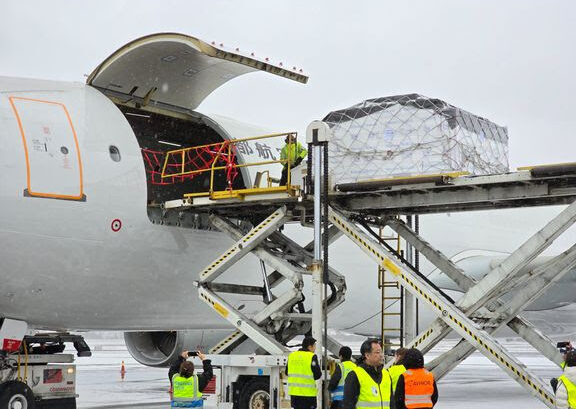
“It’s easy to assume it’s Chinese New Year. They took 2,500 tonnes last week. I know there isn’t that much coming day by day from Chile, so we’re getting a bigger slice of the pie. Next week is the last full week before Chinese New Year, and it could easily reach 3,500 tonnes based on the orders we’ve placed there. It’s not unthinkable that prices could reach Polish levels. That’s China alone. Chinese New Year is also celebrated in other Asian countries,” he notes.
The Chinese New Year celebrations run from 17 February to 3 March.
Correction
“After such a big fall, it would be strange if there wasn’t a correction,” he adds.
It’s tight at the door for those who haven’t bought in ahead of the weekend.
“We haven’t bought anything yet, but expectations among farmers are high. If prices rise too much, the risk of a correction in week seven increases,” says an exporter.
“Volumes to China ahead of Chinese New Year are pushing prices up, but Chinese buyers also have a pain threshold,” he says.
