




Long-term gravel restoration lifts salmon spawning on Dartmoor river.
South West Water has reported improved Atlantic salmon spawning activity on Dartmoor’s River Teign following more than a decade of habitat restoration work linked to the Fernworthy reservoir scheme.
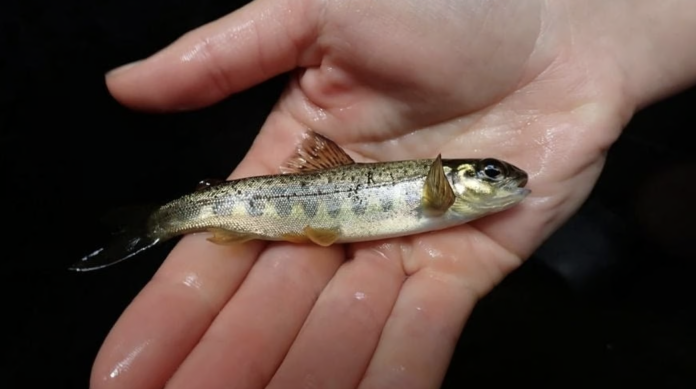
Electric-fishing surveys show that Atlantic salmon are now consistently being recorded further upstream in the South Teign, in areas where they had not been observed for many years. Salmon have been detected for five consecutive years at a monitoring site close to the dam wall, and salmon fry have also been found in the area, indicating successful local spawning.
The work has involved the addition of around 1,000 tonnes of gravel to the river over an 11-year period to counter the impact of the dam on natural sediment movement. The intervention is designed to recreate the loose, clean gravels required by salmon and trout for egg-laying.
The project has been delivered in partnership with the Westcountry Rivers Trust, which has led the monitoring programme. Olivia Cresswell, head of fisheries and ecology at the Trust, said the work had focused on restoring riverbed conditions affected by reservoir construction and altered flows.
Monitoring indicates that salmon are actively using the newly formed spawning beds, while brown trout numbers have also remained strong, suggesting wider ecological benefits.
The River Teign forms part of a network of Dartmoor rivers that are considered vulnerable to climate pressure, with hotter, drier summers reducing flows and increasing water temperatures. These conditions present particular challenges for Atlantic salmon, which favour cooler, well-oxygenated water. On some rivers in Devon and Cornwall, fewer than 60 adult salmon are estimated to return annually.
South West Water relies heavily on surface water sources to meet demand across the region, making reservoirs critical for maintaining supply during periods of low rainfall. The company said it has integrated fisheries expertise into its water resources planning to better balance public supply needs with environmental protection.
Dr Georgina Samoluk, fisheries and biodiversity advisor at South West Water, said none of the 16 principal salmon rivers in Devon and Cornwall currently support self-sustaining salmon populations, making mitigation measures increasingly important.
The findings from the River Teign are being cited as evidence that targeted habitat restoration can deliver measurable improvements for Atlantic salmon, despite wider population declines across the UK.
