Policy – July 21, 2026
Japan: local salmon rebrand highlights domestic production push

Six salmon-producing communities in northeastern Japan have adopted a common identity as corporate investment begins to lift national output.
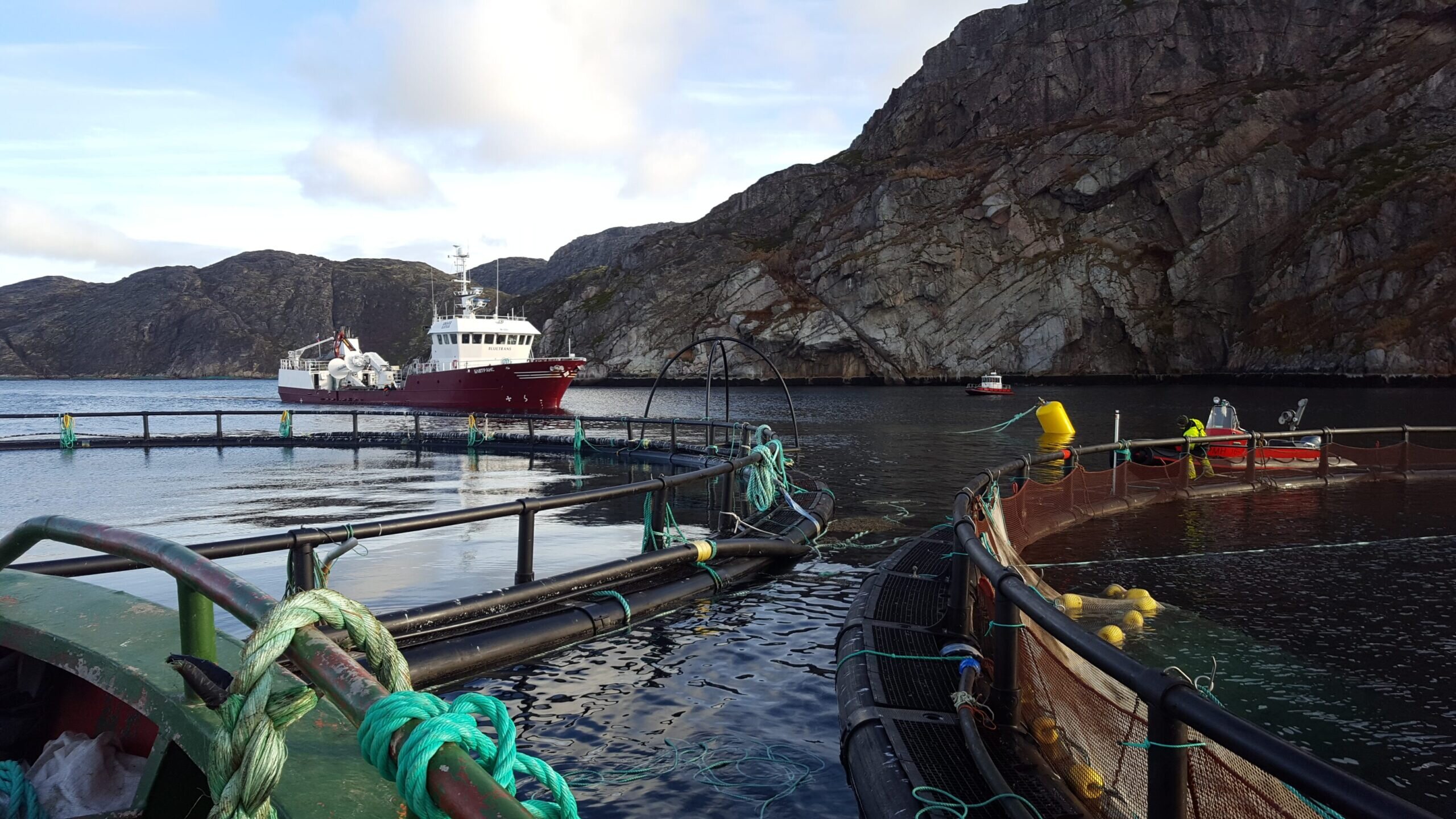
Iwate, a prefecture on Japan’s northeastern Pacific coast, is attempting to turn six separate salmon-producing communities into a recognisable regional industry, according to a press release from the prefectural government this week.
The prefecture’s long Sanriku coastline includes the municipalities of Kuji, Miyako, Yamada, Otsuchi, Kamaishi and Rikuzentakata. Each has developed its own farmed-salmon products and local branding. Iwate has now created a common logo to promote them collectively at events and retailers outside the region.
The design places two salmon in the shape of the Japanese character “i”, surrounded by six symbols representing the participating communities. It is intended to create recognition for “Iwate salmon” without replacing the individual origins of the fish.
Iwate harvested about 3,800 tonnes of farmed salmon in fiscal 2025 and is targeting 4,000 tonnes this year. The volumes are modest, but the initiative offers a useful view of Japan’s emerging salmon industry: highly local in its marketing, increasingly industrial in its production.
From local projects to a national industry
A new nationwide map published by fisheries newspaper Minato Shimbun identifies 112 Japanese farmed-salmon brands.

They include Atlantic and coho salmon, rainbow trout and cherry salmon raised in sea cages, freshwater farms and land-based systems. Many are associated with individual towns, prefectures or local ingredients rather than marketed simply as Japanese salmon.
Domestic production is estimated at 33,000–34,000 tonnes in 2026, about 10 per cent higher than the previous year. The total is an industry estimate because government statistics separately capture marine-farmed coho and inland rainbow trout but do not identify every salmonid species or production method.
The number of brands reflects Japan’s preference for marketing food through provenance. It also presents a problem: small regional names can struggle to gain recognition beyond their home markets. Iwate’s logo is an attempt to preserve local distinctions while giving producers a larger platform.
Imports remain dominant
Market comparisons are complicated by Japanese terminology. “Salmon” is commonly used as a broad commercial category covering several salmonids, including Atlantic salmon, coho and rainbow trout sold as “salmon trout”.
Japan imported about 231,500 tonnes of salmon and trout products in 2025. Chile dominates frozen coho and trout, recording exports to Japan worth $1.17bn. Norway leads the narrower 62,000-tonne Atlantic salmon segment, holding about 68 per cent and a still larger share of fresh supply.
Japan will remain a minor producer beside these established suppliers. Domestic farms are instead competing through freshness, shorter supply chains and the premium attached to particular Japanese regions.
Larger companies increase production
Behind the local brands, several large companies are building capacity.
Nissui produced approximately 4,100 tonnes domestically in 2025 and plans to reach 10,000 tonnes by 2030. Its expansion includes new farming and juvenile-production capacity in Iwate.
Okamura Foods, through its Japan Salmon Farm subsidiary, plans to harvest 4,300 tonnes domestically during the April–July 2026 season, up from 3,476 tonnes in 2025, and is targeting 12,000 tonnes under its 2030 growth plan.
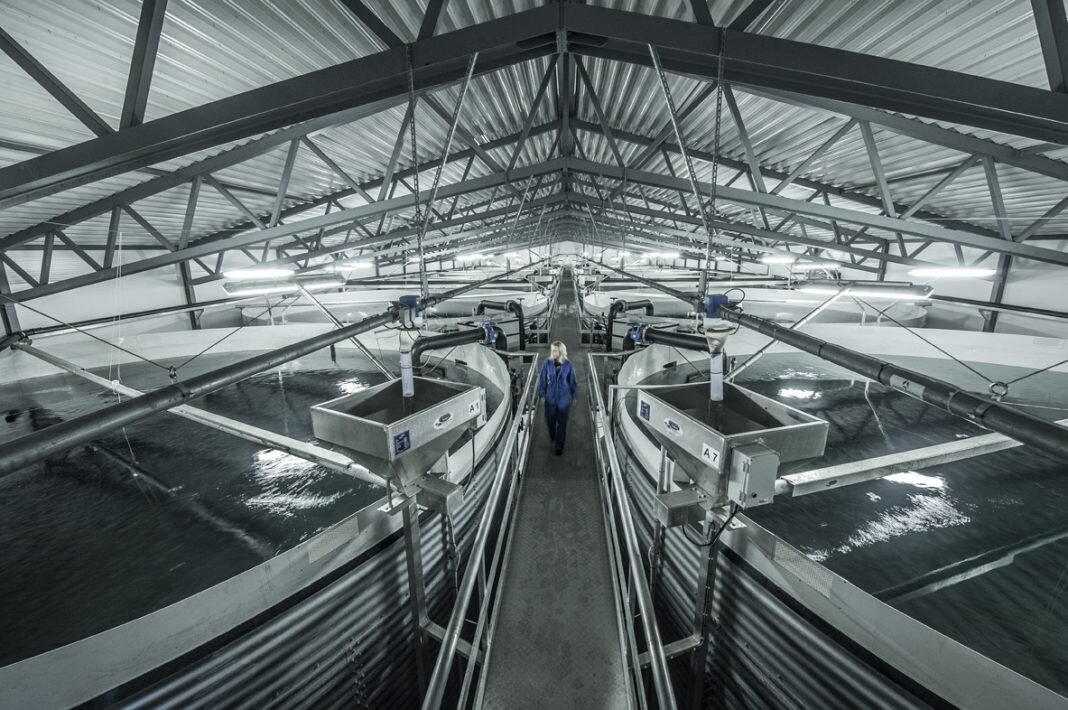
At Mount Fuji, the Marubeni-backed Proximar facility harvested 1,338 tonnes of Atlantic salmon in 2025. It expects 3,000–3,400 tonnes this year and has annual capacity of 5,300 tonnes.
Further output is due from 2027. FRD Japan has started operating a 3,500-tonne land-based trout facility in Chiba, while Mitsubishi and Umios, formerly Maruha Nichiro, are developing a 2,500-tonne Atlantic salmon farm in Toyama.
Even railway operators have entered the sector, although at experimental scale. JR Shikoku’s first land-based project expects production of only about 12–13 tonnes.
The stated targets of five of the larger projects exceed 33,000 tonnes of annual capacity—roughly the size of Japan’s present industry. The figures use different weight measures and completion dates and should not be treated as a national forecast.
A researcher at the Japan Fisheries Research and Education Agency has said output could exceed 40,000 tonnes by 2027 or 2028, depending on the progress of large land-based farms.
Japan is not building a rival to Norway or Chile. It is developing a smaller domestic tier built around fresh supply and regional identity. Iwate’s new logo captures that strategy: six local production areas seeking greater visibility without presenting their salmon as a single anonymous commodity.