Industry – July 22, 2026
SalMar and Lerøy: prepare to double Norway’s floating closed-cage capacity

Six large floating closed-containment cages being built in China for SalMar and Lerøy are nearing shipment to Norway after Seafarming Systems appointed CCB Ågotnes to complete their assembly.
The Aquatraz C2 units are scheduled for delivery in the fourth quarter of 2026. Once operational, they are expected to roughly double Norway’s existing production volume in floating closed cages, according to a press release from the company.
Three cages will be delivered to SalMar and three to Lerøy. The salmon farmers previously said they expected to stock the first fish in early 2027, with full operations from 2028.
Steel sections for the cages are being fabricated simultaneously at Blue Ocean Wind’s shipyard in Jieyang, China. They will be transported to CCB’s Ågotnes base near Bergen for final assembly.
“Section fabrication in China and assembly of the cages in Norway gives us the best of both worlds,” Seafarming Systems general manager Alf Reidar Sandstad said.
The arrangement provides access to Chinese shipbuilding capacity while retaining final assembly and aftermarket work in Norway. Production takes approximately 11 months from steel cutting to completed delivery.
Designed for production through to harvest
Each Aquatraz C2 has an enclosed volume of 70,000 cubic metres, a double containment barrier, seawater intakes extending to at least 35 metres and integrated sludge collection.
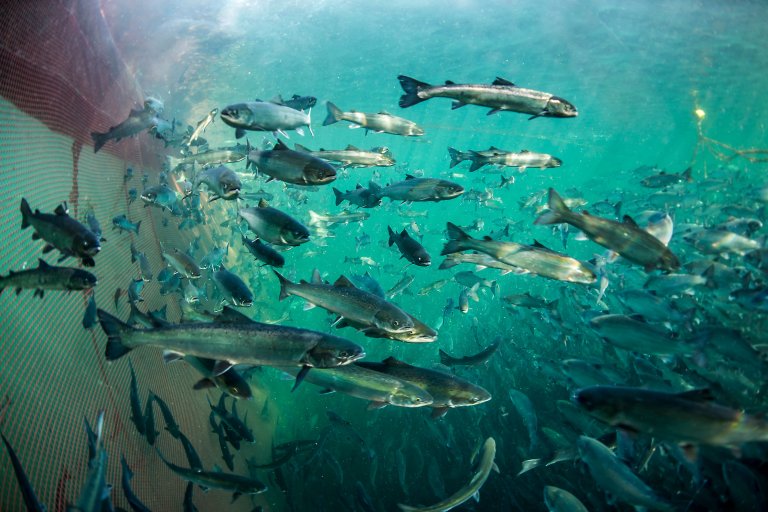
The system is fully enclosed below the waterline and is designed to carry salmon beyond post-smolt production through to harvest. Its development draws on approximately 30,000 tonnes of salmon produced in earlier Aquatraz generations.
Seafarming Systems said the design meets Norway’s environmental-flexibility requirements, which allow certain capacity removed under the traffic-light system to be used in facilities meeting stricter environmental conditions.
The company is preparing to increase annual delivery capacity to as many as 50 cages within the next several years. Sandstad said that would require a manufacturing and service network capable of operating at scale in both China and Norway.